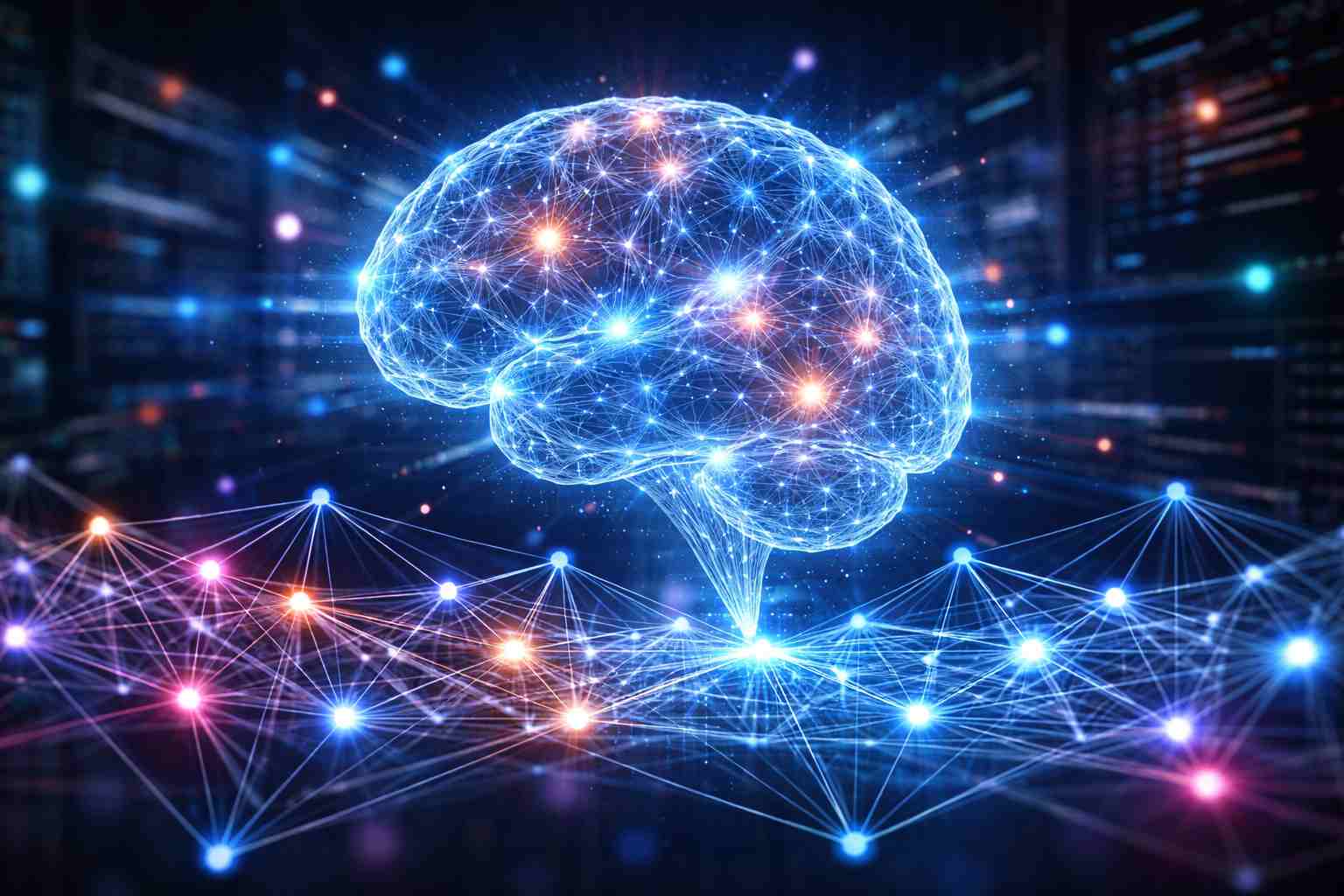
Neural networks are a foundational concept in artificial intelligence that mimic the way the human brain processes information. They consist of interconnected layers of nodes (also called neurons) that work together to recognize patterns, make decisions, and learn from data. Today, neural networks power everything from voice assistants and recommendation systems to self-driving cars and medical diagnostics. Understanding how they function is key to grasping the future of technology.
What Are Neural Networks?
A neural network is a computational model designed to simulate how biological neurons interact. It takes input data, processes it through multiple layers, and produces an output. Each connection between neurons has a weight, which adjusts as the model learns. The goal is to transform raw data into meaningful predictions or classifications through a structured learning process.
Structure of Neural Networks
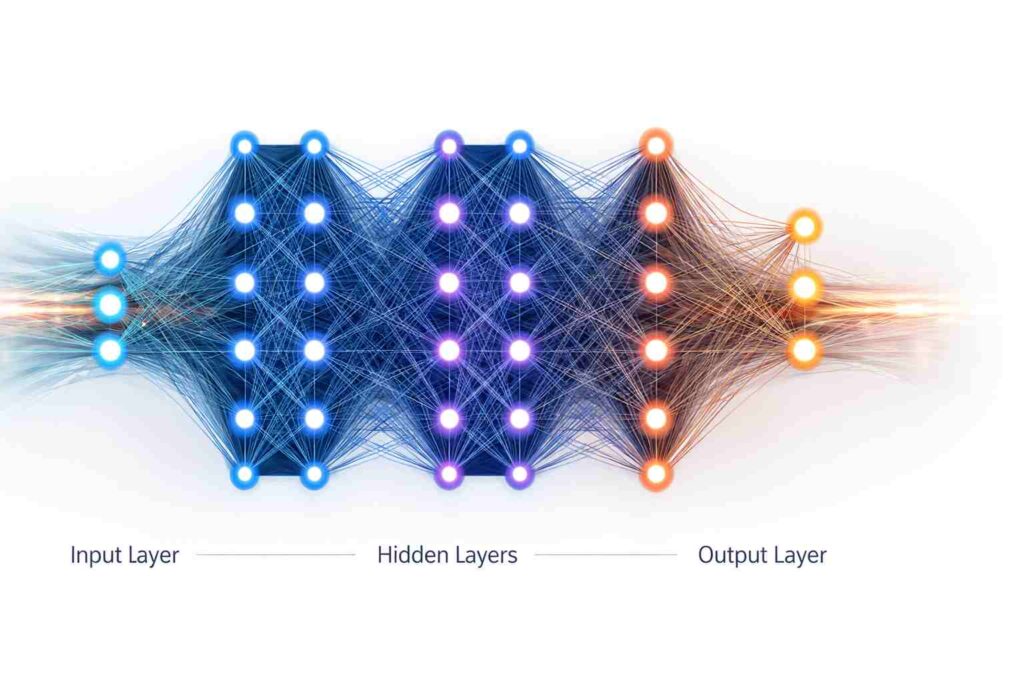
Neural networks are typically composed of three main types of layers: the input layer, hidden layers, and the output layer. The input layer receives raw data, hidden layers perform complex computations, and the output layer delivers the final result. The depth and complexity of a network depend on the number of hidden layers, which is why advanced systems are often referred to as deep neural networks.
How Neural Networks Work
Neural networks operate through a process called forward propagation, where input data passes through layers and is transformed into output. Each neuron applies a mathematical function to its inputs and passes the result forward. After producing an output, the network compares it with the expected result and calculates an error. This error is then used to adjust the weights in a process called backpropagation, improving accuracy over time.
Types of Neural Networks
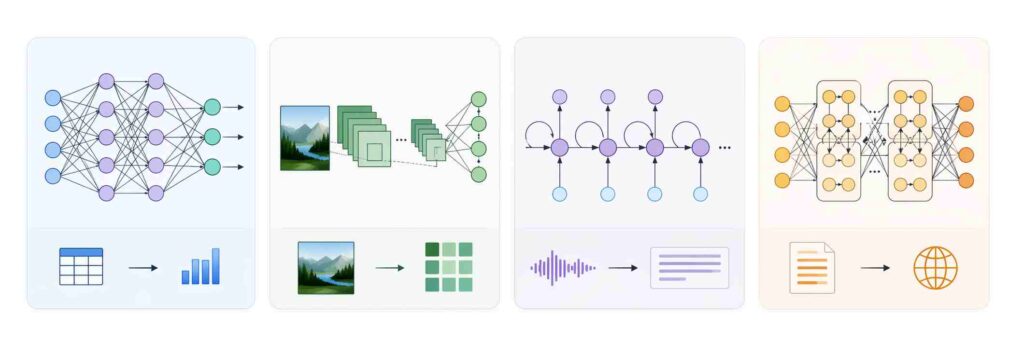
There are several types of neural networks designed for different tasks. Feedforward neural networks are the simplest form, where data moves in one direction. Convolutional neural networks (CNNs) are widely used in image recognition and computer vision. Recurrent neural networks (RNNs) are ideal for sequential data like text and speech. More advanced variations, such as transformers, are now widely used in natural language processing.
Applications of Neural Networks
Neural networks are used across many industries. In healthcare, they assist in diagnosing diseases and analyzing medical images. In finance, they help detect fraud and predict market trends. In e-commerce, they power recommendation engines. Autonomous vehicles rely on neural networks for navigation and object detection, while chatbots and virtual assistants use them to understand and respond to human language.
Advantages of Neural Networks
One of the biggest advantages of neural networks is their ability to learn complex patterns from large datasets. They can handle nonlinear relationships and improve automatically with more data. Neural networks also excel in tasks that involve perception, such as image and speech recognition, where traditional programming approaches fall short.
Challenges and Limitations
Despite their power, neural networks come with challenges. They require large amounts of data and computational resources to train effectively. They can also be difficult to interpret, often described as “black boxes.” Overfitting is another common issue, where the model performs well on training data but poorly on new data. Additionally, ethical concerns such as bias and fairness are important considerations.
Why Neural Networks Matter
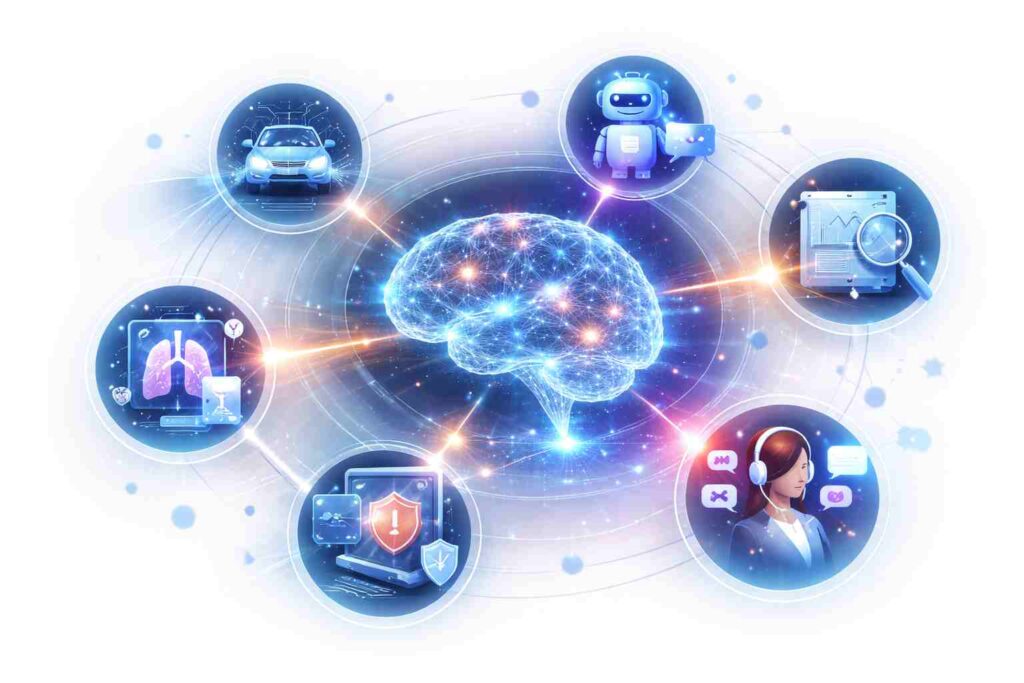
Neural networks matter because they enable machines to learn from data instead of relying on rigid, rule-based programming. Traditional software follows explicit instructions, but neural networks adapt by identifying patterns and relationships within large datasets. This ability makes them incredibly powerful for solving complex problems that are difficult or impossible to program manually, such as recognizing images, understanding speech, or predicting human behavior.
Another key reason neural networks are important is their role in advancing artificial intelligence. They are the backbone of modern AI systems, especially in deep learning, which has driven major breakthroughs in recent years. Technologies like voice assistants, language translation tools, and recommendation engines all rely on neural networks to function effectively. Without them, many of the smart features we use daily would not exist.
Neural networks also matter because they can handle unstructured data such as text, images, audio, and video. Unlike traditional models that require clean and structured inputs, neural networks can process messy, real-world data and still produce meaningful results. This makes them essential in fields like healthcare for medical imaging, finance for fraud detection, and cybersecurity for threat analysis.
In addition, neural networks improve over time as they are exposed to more data. This continuous learning capability allows systems to become more accurate and efficient without needing to be completely reprogrammed. As a result, businesses and organizations can scale their operations and make better data-driven decisions.
Finally, neural networks are shaping the future of technology and society. From autonomous vehicles to personalized medicine, they are driving innovation across industries. Their impact goes beyond convenience—they are transforming how we work, communicate, and solve global challenges, making them one of the most important technologies of the modern era.
Future of Neural Networks
The future of neural networks is rapidly evolving, with ongoing advancements in deep learning, efficiency, and explainability. Researchers are working on making models more transparent, faster, and less resource-intensive. As technology progresses, neural networks are expected to become even more integrated into daily life, shaping industries and redefining how humans interact with machines.
Conclusion
Neural networks are at the heart of modern artificial intelligence, enabling machines to learn, adapt, and make intelligent decisions. From simple models to complex deep learning systems, they continue to drive innovation across various fields. As understanding and technology improve, neural networks will remain a critical component of the digital world, unlocking new possibilities and transforming the future.


Leave a Reply