
Artificial Intelligence is no longer a futuristic concept—it’s a practical tool reshaping how organizations manage their workforce. AI in HR is helping businesses streamline operations, improve decision-making, and enhance employee experiences. From recruitment to performance management, AI is transforming traditional HR processes into faster, smarter, and more efficient systems. As companies continue to evolve in a competitive landscape, adopting AI in HR is becoming less of an option and more of a necessity.
What is AI in HR?
AI in HR refers to the use of artificial intelligence technologies such as machine learning, natural language processing, and predictive analytics to automate and improve human resource functions. These tools help HR professionals analyze large volumes of data, identify patterns, and make informed decisions. Whether it’s screening resumes or predicting employee turnover, AI enables HR teams to focus on strategic tasks rather than repetitive manual work.
Key Benefits of AI in HR
1. Smarter Recruitment and Talent Acquisition
One of the biggest advantages of AI in HR is its ability to transform recruitment. AI-powered tools can scan thousands of resumes within seconds, identify the best candidates, and even rank them based on job requirements. This not only saves time but also reduces human bias in hiring decisions. Chatbots can also interact with candidates, schedule interviews, and answer queries, creating a smoother hiring experience.
2. Improved Employee Experience
Employee satisfaction plays a crucial role in organizational success. AI in HR helps companies personalize employee experiences by analyzing behavior, preferences, and feedback. AI-driven platforms can recommend training programs, suggest career paths, and even monitor employee sentiment through surveys and communication data. This leads to higher engagement and retention.
3. Data-Driven Decision Making
Modern organizations generate massive amounts of HR data. AI in HR enables companies to turn this data into actionable insights. Predictive analytics can forecast employee turnover, identify high-performing individuals, and highlight areas for improvement. HR leaders can make better strategic decisions based on accurate and real-time data rather than guesswork.
4. Automation of Repetitive Tasks
Administrative tasks such as payroll processing, attendance tracking, and leave management can be time-consuming. AI in HR automates these routine activities, allowing HR professionals to focus on more valuable work like employee development and organizational strategy. Automation also reduces errors and ensures consistency across processes.
5. Enhanced Learning and Development
Training and development are essential for workforce growth. AI in HR enables personalized learning experiences by analyzing employee skills and recommending relevant courses. AI-powered learning platforms adapt to individual progress, ensuring employees gain the right knowledge at the right time. This improves productivity and prepares teams for future challenges.
Importance of Artificial Intelligence in HR Today
Artificial Intelligence has become a critical part of modern human resource management, helping organizations operate more efficiently and make smarter decisions. Today, AI in HR enables companies to automate routine tasks, analyze large volumes of employee data, and improve hiring accuracy. It supports HR teams in identifying top talent, enhancing employee engagement, and predicting workforce trends. As businesses face increasing competition and rapid digital transformation, AI in HR is no longer just an advantage—it is essential for building agile, data-driven, and future-ready organizations.
Key Points:
- Faster Recruitment: AI screens resumes quickly and identifies the best candidates.
- Data-Driven Decisions: Provides insights for better hiring, retention, and workforce planning.
- Automation of Tasks: Reduces manual work like payroll, attendance, and documentation.
- Improved Employee Experience: Personalizes training, feedback, and career development.
- Reduced Bias: Helps minimize human bias in hiring and evaluations.
- Predictive Analytics: Forecasts employee turnover and performance trends.
- Enhanced Productivity: Allows HR teams to focus on strategic initiatives instead of repetitive tasks.
How HR departments are using AI
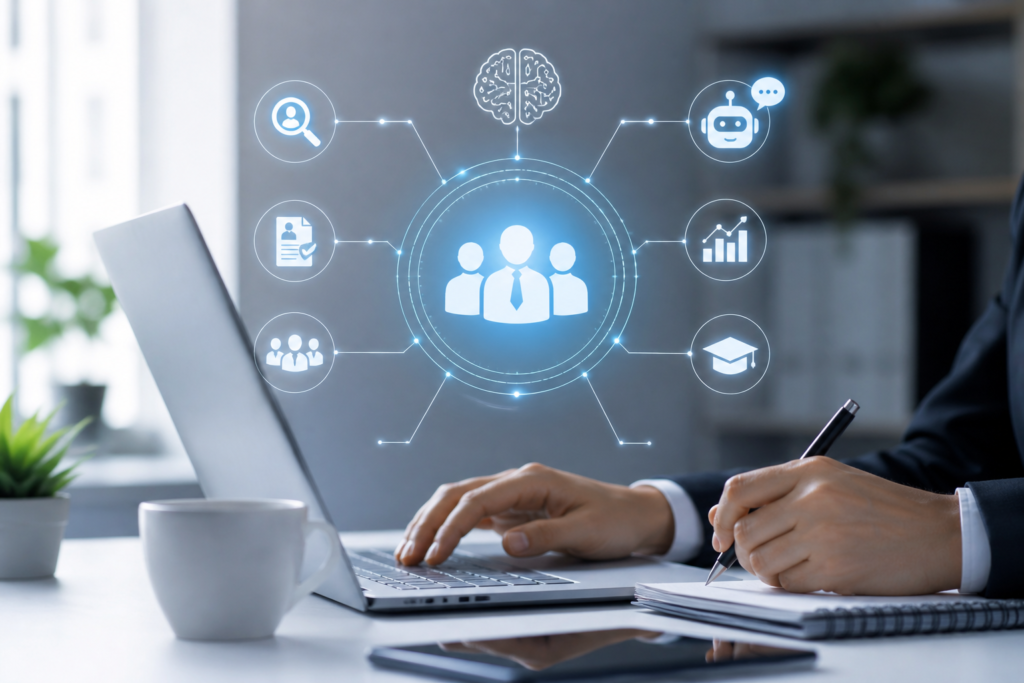
HR departments are increasingly using Artificial Intelligence to modernize their processes and improve overall efficiency. Through AI in HR, organizations are automating repetitive tasks such as resume screening, interview scheduling, payroll processing, and employee queries using chatbots. AI tools also help analyze employee data to identify performance trends, predict turnover, and recommend personalized training programs. In recruitment, AI can match candidates with job roles more accurately, reducing hiring time and improving quality. Additionally, HR teams use AI-driven insights to enhance employee engagement, monitor workplace sentiment, and make strategic decisions that align with business goals.
Challenges of Implementing AI in HR
While the benefits are significant, implementing AI in HR comes with its own set of challenges. Data privacy and security concerns are major issues, as HR systems handle sensitive employee information. Additionally, there is a risk of algorithmic bias if AI systems are not properly designed and monitored. Organizations also need skilled professionals to manage and maintain AI technologies effectively.
The Future of AI in HR: What’s Next?
The future of AI in HR looks promising as technology continues to advance. AI will become more intuitive, offering deeper insights into employee behavior and organizational performance. Virtual HR assistants will become more common, handling complex queries and providing real-time support. Predictive analytics will evolve further, helping companies plan workforce strategies with greater accuracy.
Moreover, ethical AI will play a crucial role in shaping HR practices. Organizations will focus on transparency, fairness, and accountability in AI systems to build trust among employees. Integration with other technologies like cloud computing and advanced analytics will further enhance the capabilities of AI in HR.
How Businesses Can Get Started with AI in HR
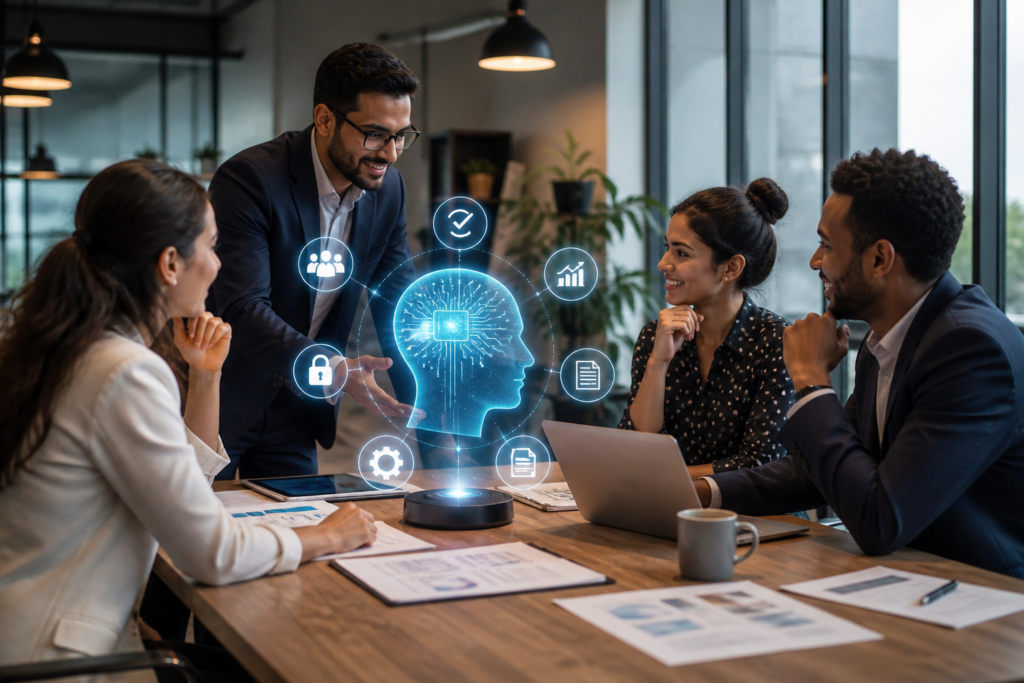
To successfully implement AI in HR, companies should start by identifying areas where AI can add the most value. Investing in the right tools and technologies is essential, along with training HR teams to use them effectively. Organizations should also establish clear policies for data usage and ensure compliance with privacy regulations. Starting small and scaling gradually is often the most effective approach.
Conclusion
AI in HR is revolutionizing the way organizations manage their workforce. By automating processes, improving decision-making, and enhancing employee experiences, AI is helping HR departments become more strategic and impactful. While challenges exist, the long-term benefits far outweigh the risks. As technology continues to evolve, businesses that embrace AI in HR will be better positioned to attract, retain, and develop top talent in the future.
Leave a Reply