
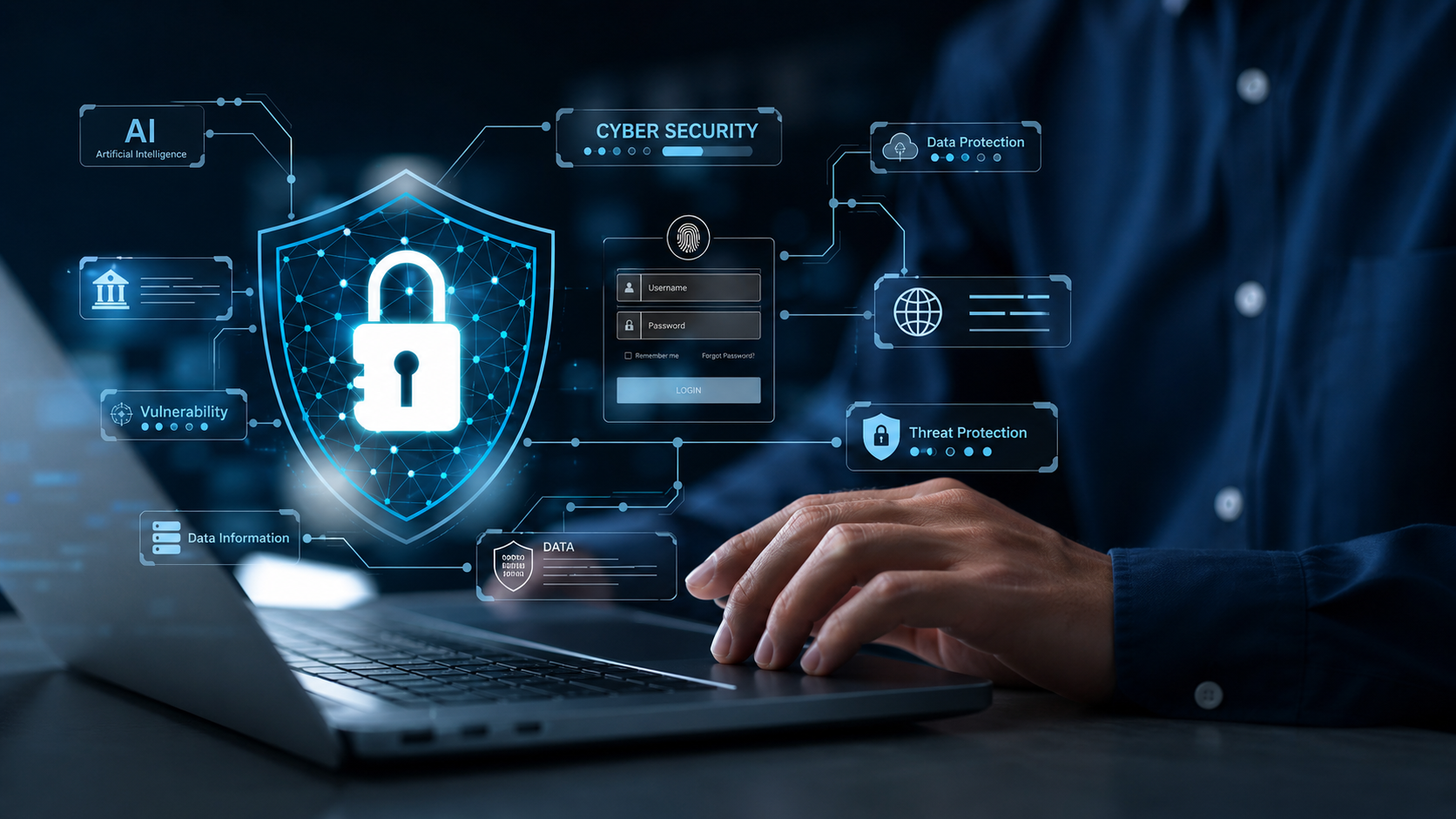
AI in Cybersecurity has become one of the most critical concerns for organizations in the digital age. As cyber threats grow more sophisticated, traditional security approaches often struggle to keep up. Artificial Intelligence (AI) is transforming the cybersecurity landscape by enabling faster threat detection, smarter defense mechanisms, and more proactive risk management. This article explores how AI is reshaping cybersecurity, its key benefits, effective defense strategies, and what the future holds.
AI in Cybersecurity
Artificial Intelligence in cybersecurity refers to the use of machine learning, data analytics, and automation to detect, prevent, and respond to cyber threats. Unlike traditional systems that rely heavily on predefined rules, AI-driven systems can learn from data, identify patterns, and adapt to evolving threats in real time.
With the rapid increase in cyberattacks such as ransomware, phishing, and data breaches, organizations are turning to AI to strengthen their defenses. AI not only enhances security operations but also reduces the burden on human analysts by automating repetitive tasks.
Key Benefits of AI in Cybersecurity
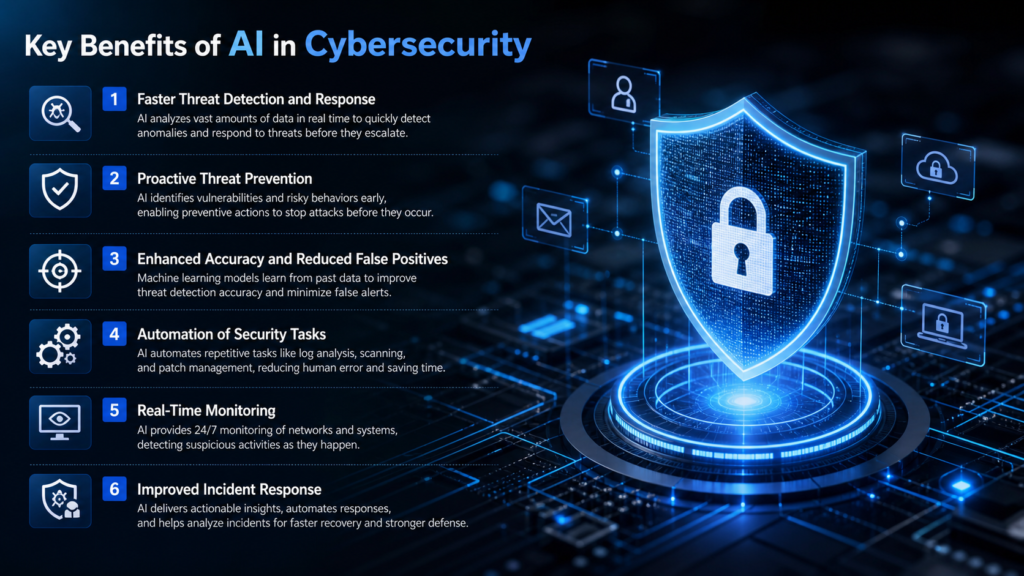
1. Faster Threat Detection and Response
AI dramatically reduces the time it takes to identify and respond to cyber threats by processing massive volumes of data at high speed. Traditional systems often rely on manual analysis or predefined rules, which can delay detection. In contrast, AI continuously scans network activity, user behavior, and system logs in real time. When it detects anomalies—such as unusual login attempts, abnormal data transfers, or suspicious code execution—it immediately flags them for action. This rapid detection allows organizations to respond to threats before they escalate, limiting financial losses, data breaches, and operational disruptions.
2. Proactive Threat Prevention
One of AI’s most powerful capabilities is its ability to anticipate threats before they occur. By analyzing historical attack data, behavioral patterns, and system vulnerabilities, AI can identify potential weaknesses that cybercriminals might exploit. For example, it can detect outdated software, misconfigured systems, or risky user behaviors. With these insights, organizations can take preventive measures such as patching vulnerabilities, strengthening access controls, or adjusting security policies. This proactive approach shifts cybersecurity from a reactive model to a preventive one, significantly reducing the likelihood of successful attacks.
3. Enhanced Accuracy and Reduced False Positives
A common challenge in traditional cybersecurity systems is the high number of false positives—alerts that indicate a threat when none exists. These unnecessary alerts can overwhelm security teams and cause real threats to be overlooked. AI improves accuracy by using machine learning algorithms that continuously learn from past data and refine their detection models. Over time, AI becomes better at distinguishing between normal system behavior and genuine threats. This reduces noise in the system, allowing security professionals to focus only on high-risk alerts, improving efficiency and overall security effectiveness.
4. Automation of Security Tasks
AI brings significant efficiency to cybersecurity by automating repetitive and time-consuming tasks. Activities such as log analysis, vulnerability scanning, patch management, and threat classification can be handled automatically by AI systems. This not only speeds up operations but also reduces human error. For instance, instead of manually reviewing thousands of log entries, AI can instantly analyze them and highlight critical issues. Automation also enables faster incident handling, as AI can initiate predefined responses like isolating affected systems or blocking malicious traffic. This allows cybersecurity teams to concentrate on strategic planning and complex threat analysis.
5. Real-Time Monitoring
AI-powered cybersecurity tools provide continuous, around-the-clock monitoring of networks, endpoints, and applications. Unlike traditional systems that may rely on periodic scans, AI operates in real time, ensuring that threats are detected the moment they occur. This is especially important in today’s fast-paced digital environments, where cyberattacks can spread within minutes. Real-time monitoring enables immediate detection of suspicious activities such as unauthorized access attempts, data exfiltration, or malware infections. As a result, organizations can respond instantly, reducing the potential impact and preventing widespread damage.
6. Improved Incident Response
AI enhances incident response by providing actionable insights and intelligent recommendations during security events. When a threat is detected, AI systems can analyze the situation, determine the severity of the attack, and suggest or even execute appropriate responses. For example, AI can automatically isolate compromised devices, block malicious IP addresses, or trigger alerts for security teams. Additionally, AI helps in post-incident analysis by identifying the root cause of the attack and recommending measures to prevent future occurrences. This leads to faster recovery times, stronger defenses, and a more resilient cybersecurity framework overall.
AI-Driven Defense Strategies
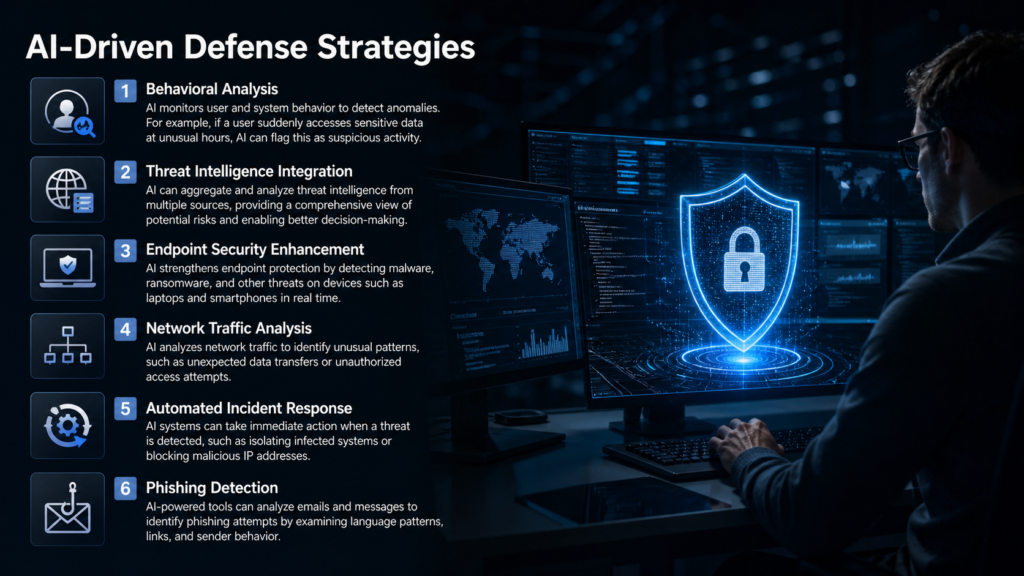
1. Behavioral Analysis
AI monitors user and system behavior to detect anomalies. For example, if a user suddenly accesses sensitive data at unusual hours, AI can flag this as suspicious activity.
2. Threat Intelligence Integration
AI can aggregate and analyze threat intelligence from multiple sources, providing a comprehensive view of potential risks and enabling better decision-making.
3. Endpoint Security Enhancement
AI strengthens endpoint protection by detecting malware, ransomware, and other threats on devices such as laptops and smartphones in real time.
4. Network Traffic Analysis
AI analyzes network traffic to identify unusual patterns, such as unexpected data transfers or unauthorized access attempts.
5. Automated Incident Response
AI systems can take immediate action when a threat is detected, such as isolating infected systems or blocking malicious IP addresses.
6. Phishing Detection
AI-powered tools can analyze emails and messages to identify phishing attempts by examining language patterns, links, and sender behavior.
Challenges of AI in Cybersecurity
While AI offers significant advantages, it also comes with challenges:
- Data Privacy Concerns: AI systems require large datasets, which may raise privacy and compliance issues.
- High Implementation Costs: Deploying AI-based cybersecurity solutions can be expensive for small organizations.
- Adversarial Attacks: Cybercriminals can also use AI to create more sophisticated attacks or manipulate AI systems.
- Skill Gap: There is a growing need for skilled professionals who can manage and optimize AI-driven security systems.
Future Trends in AI and Cybersecurity
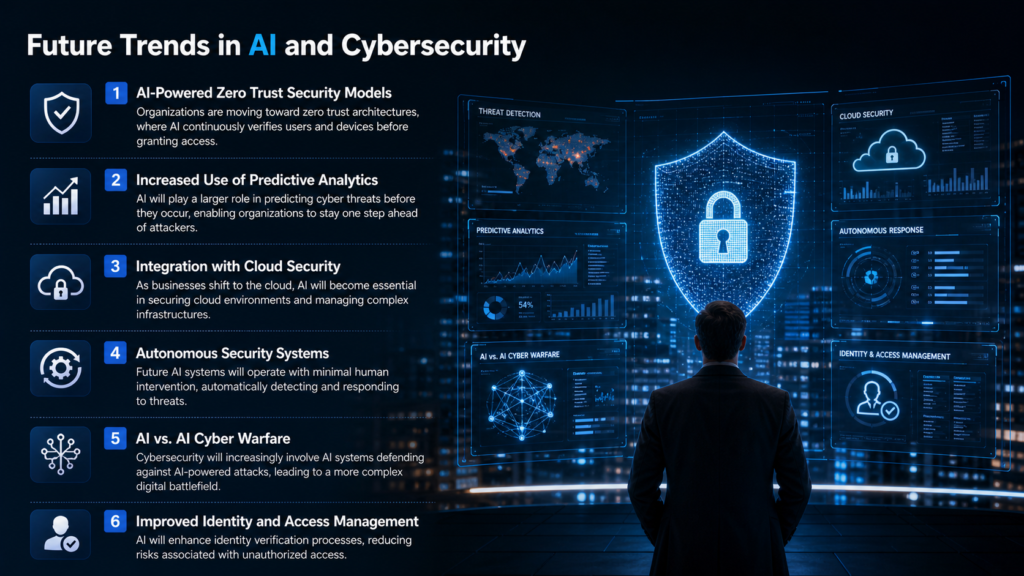
1. AI-Powered Zero Trust Security Models
Organizations are moving toward zero trust architectures, where AI continuously verifies users and devices before granting access.
2. Increased Use of Predictive Analytics
AI will play a larger role in predicting cyber threats before they occur, enabling organizations to stay one step ahead of attackers.
3. Integration with Cloud Security
As businesses shift to the cloud, AI will become essential in securing cloud environments and managing complex infrastructures.
4. Autonomous Security Systems
Future AI systems will operate with minimal human intervention, automatically detecting and responding to threats.
5. AI vs. AI Cyber Warfare
Cybersecurity will increasingly involve AI systems defending against AI-powered attacks, leading to a more complex digital battlefield.
6. Improved Identity and Access Management
AI will enhance identity verification processes, reducing risks associated with unauthorized access.
Best Practices for Implementing AI in Cybersecurity
- Start with a clear cybersecurity strategy and identify areas where AI can add value.
- Invest in high-quality data to train AI systems effectively.
- Combine AI with human expertise for better decision-making.
- Regularly update and monitor AI systems to ensure optimal performance.
- Ensure compliance with data privacy and security regulations.
Conclusion
AI is revolutionizing cybersecurity by providing smarter, faster, and more efficient ways to combat cyber threats. From real-time monitoring to predictive threat analysis, AI empowers organizations to stay ahead in an increasingly complex threat landscape. However, successful implementation requires careful planning, skilled professionals, and a balanced approach that combines AI capabilities with human intelligence.
As cyber threats continue to evolve, AI will play an even more critical role in shaping the future of cybersecurity—transforming it from a reactive process into a proactive and intelligent defense system.
Leave a Reply