

AI Algorithms is transforming the way we live, work, and interact with technology. From voice assistants to self-driving cars, AI systems are powered by complex yet fascinating AI algorithms. These algorithms act as the brain behind intelligent machines, enabling them to learn, adapt, and make decisions.
In this article, we’ll explore what AI algorithms are, how they work, their types, real-world applications, and why they are important in today’s digital world.
What Are AI Algorithms?
AI algorithms are sets of rules or instructions that enable machines to perform tasks that typically require human intelligence. These tasks include learning from data, recognizing patterns, solving problems, and making decisions.
In simple terms, an AI algorithm takes input data, processes it, and produces an output—often improving its performance over time through learning.
How Do AI Algorithms Work?
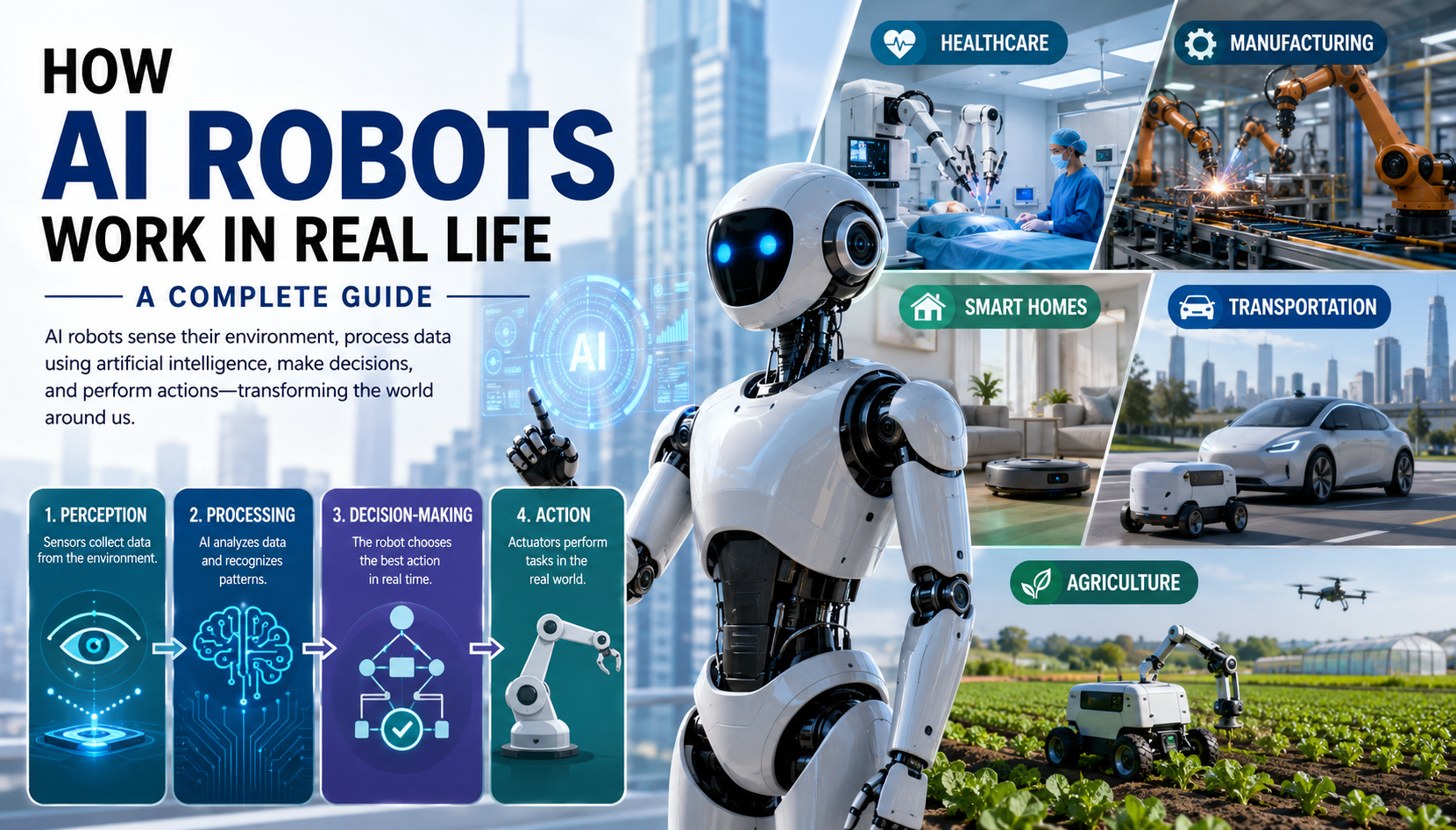
AI algorithms work by analyzing large amounts of data and identifying patterns within it. The process typically involves:
- Data Collection – Gathering relevant data from various sources
- Data Processing – Cleaning and organizing the data
- Model Training – Feeding data into the algorithm to learn patterns
- Prediction/Decision Making – Producing outputs based on learned patterns
- Continuous Improvement – Refining performance through feedback
This cycle allows AI systems to become more accurate and efficient over time.
Types of AI Algorithms
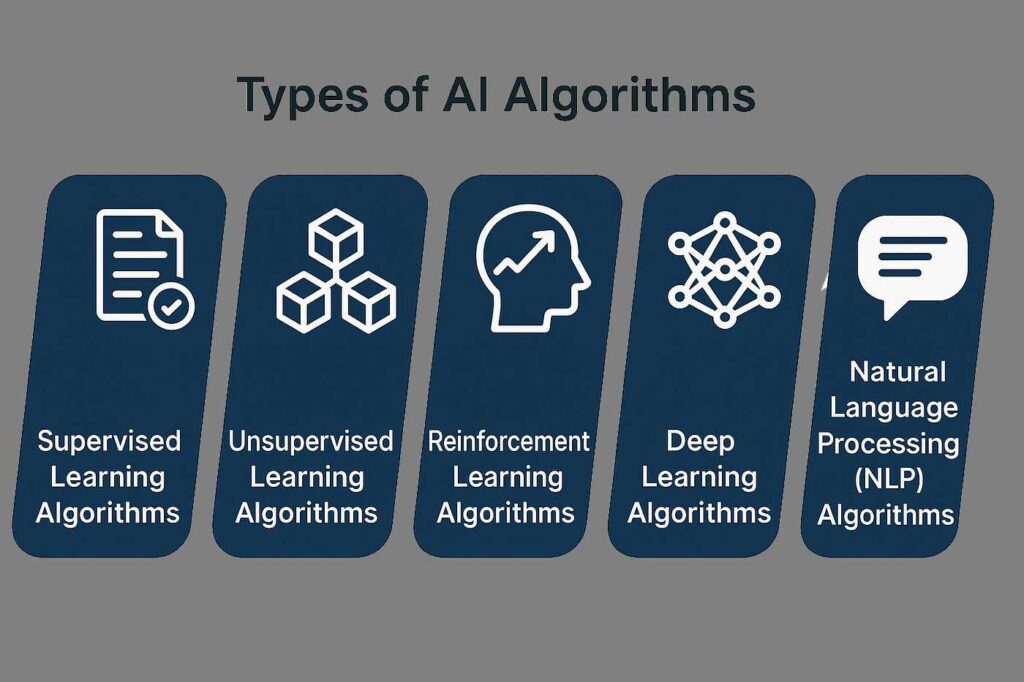
There are several types of AI algorithms, each designed for specific tasks. Let’s explore the most important ones:
1. Machine Learning Algorithms
Machine Learning (ML) algorithms are one of the most important parts of artificial intelligence. They allow systems to learn from data and improve their performance without being explicitly programmed. Instead of following fixed instructions, these algorithms identify patterns in data and make predictions or decisions based on those patterns. ML is widely used in real-world applications such as recommendation systems, fraud detection, and automation.
a) Supervised Learning:
Supervised learning is a type of machine learning where the algorithm is trained on labeled data. This means the input data is paired with the correct output, allowing the system to learn the relationship between them. Over time, the algorithm can predict outcomes for new, unseen data. Common examples include spam email detection and house price prediction.
b) Unsupervised Learning:
Unsupervised learning works with unlabeled data, meaning there are no predefined outputs. The algorithm explores the data on its own and identifies hidden patterns or structures. This type of learning is often used for customer segmentation, clustering, and data grouping, helping businesses understand user behavior and trends.
c) Reinforcement Learning:
Reinforcement learning is based on a reward and penalty system. In this approach, an agent learns by interacting with an environment and receiving feedback based on its actions. Positive actions are rewarded, while negative ones are penalized. Over time, the system learns the best strategy to achieve its goal. This method is commonly used in game AI, robotics, and autonomous systems.
2. Deep Learning Algorithms
Deep learning algorithms are a specialized subset of machine learning that use artificial neural networks with multiple layers to process data. These networks are inspired by the structure of the human brain, allowing machines to learn complex patterns and representations. Deep learning is particularly powerful in tasks like image recognition, speech processing, and natural language understanding. It is the technology behind advanced systems such as facial recognition, voice assistants, and self-driving cars.
3. Natural Language Processing (NLP) Algorithms
Natural Language Processing (NLP) algorithms enable machines to understand, interpret, and respond to human language. These algorithms bridge the gap between human communication and computer understanding. NLP is widely used in chatbots, virtual assistants, language translation tools, and sentiment analysis systems. By analyzing text and speech, NLP helps businesses improve customer service and gain insights from user feedback.
4. Computer Vision Algorithms
Computer vision algorithms allow machines to interpret and analyze visual data such as images and videos. These algorithms can recognize objects, detect patterns, and even identify faces. Applications of computer vision include image classification, object detection, facial recognition, and surveillance systems. This technology is widely used in industries like healthcare, security, and autonomous vehicles.
5. Search and Optimization Algorithms
Search and optimization algorithms are designed to find the best possible solution from a set of available options. They are essential in solving complex problems where multiple outcomes are possible. These algorithms are commonly used in navigation systems to find the shortest route, in resource allocation to maximize efficiency, and in scheduling to optimize time and performance. Their ability to improve decision-making makes them highly valuable in both business and technology.
Popular AI Algorithms
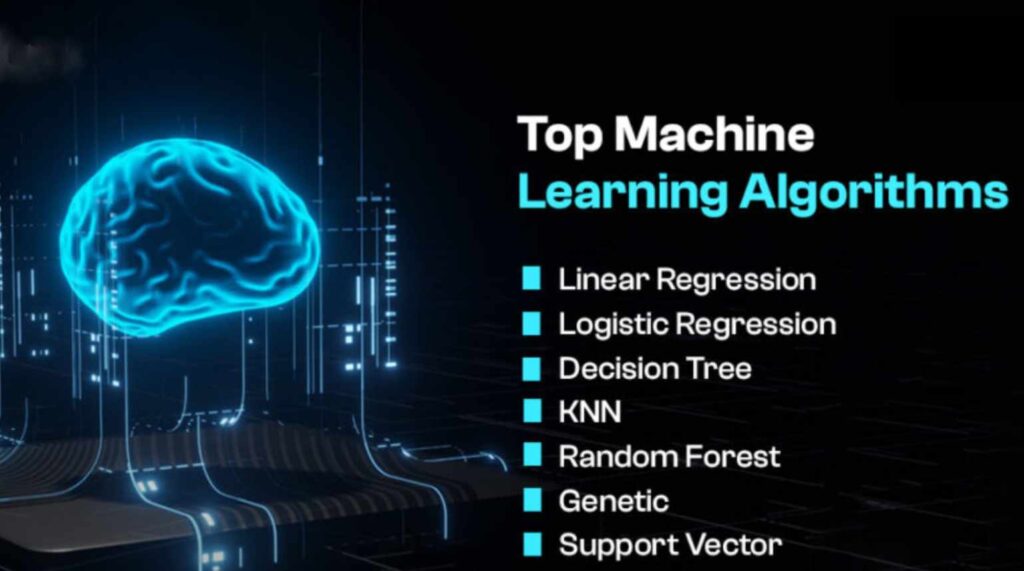
Some widely used AI algorithms include:
- Linear Regression
- Logistic Regression
- Decision Trees
- Random Forest
- Support Vector Machines (SVM)
- K-Nearest Neighbors (KNN)
- Neural Networks
Each algorithm has its strengths and is chosen based on the specific problem and data type.
Real-World Applications of AI Algorithms
AI algorithms are used in various industries and applications:
1. Healthcare
- Disease diagnosis
- Medical imaging analysis
- Drug discovery
2. Finance
- Fraud detection
- Algorithmic trading
- Credit scoring
3. E-Commerce
- Product recommendations
- Customer behavior analysis
- Chatbots
4. Transportation
- Self-driving cars
- Traffic prediction
- Route optimization
5. Cybersecurity
- Threat detection
- Anomaly detection
- Risk assessment
Benefits of AI Algorithms
AI algorithms offer numerous advantages:
- Automation – Reduces manual work
- Accuracy – Minimizes human error
- Speed – Processes large data quickly
- Scalability – Handles growing data efficiently
- Personalization – Improves user experience
Challenges of AI Algorithms
Despite their benefits, AI algorithms also come with challenges:
- Data Dependency – Requires large datasets
- Bias Issues – Can inherit bias from data
- Complexity – Difficult to design and maintain
- High Cost – Expensive implementation
- Privacy Concerns – Risk of data misuse
Future of AI Algorithms
The future of AI algorithms is incredibly promising. With advancements in computing power and data availability, AI will continue to evolve and impact every industry.
Emerging trends include:
- Explainable AI (XAI)
- Edge AI
- AI ethics and governance
- Autonomous systems
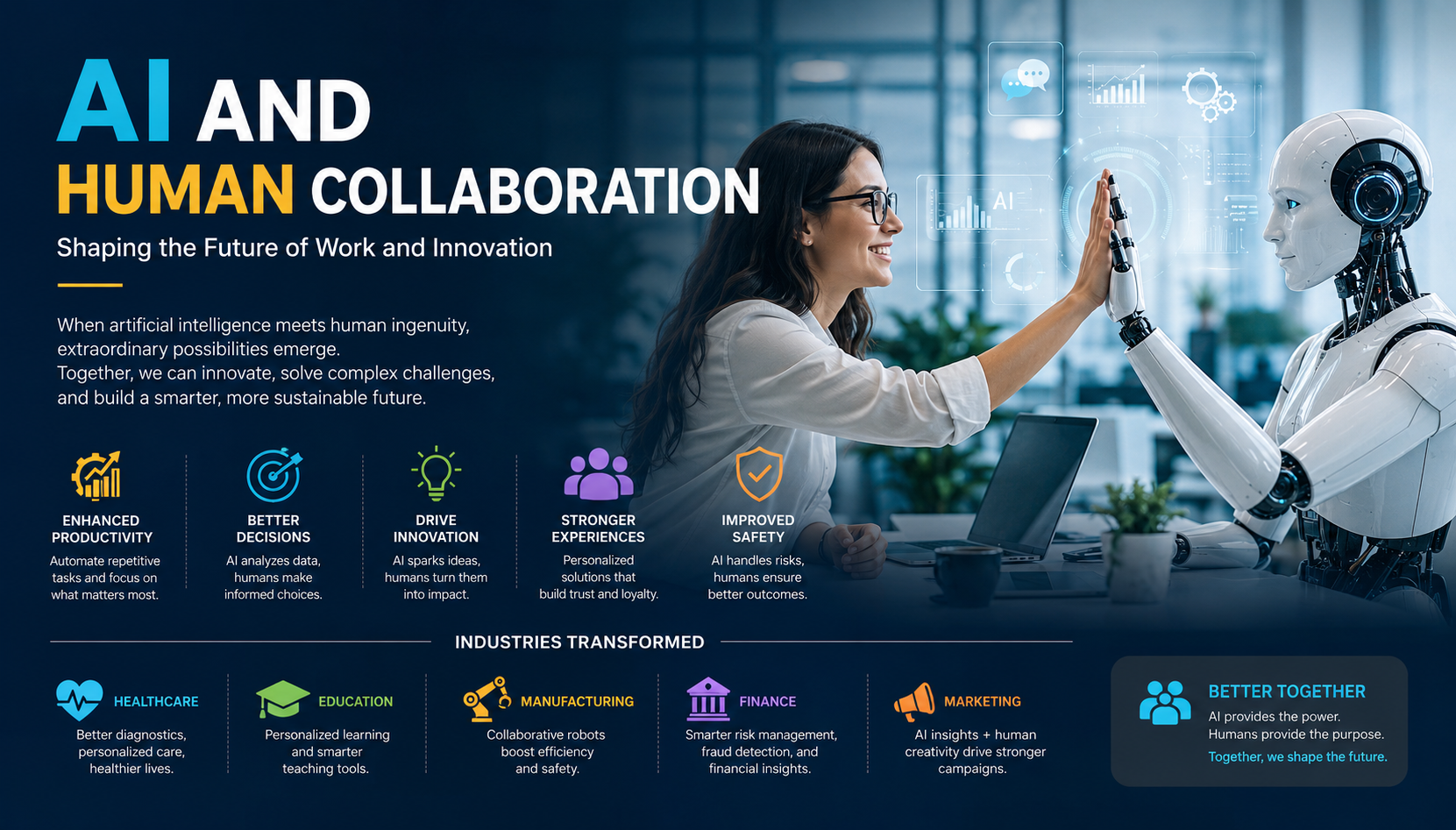
- Human-AI collaboration
AI algorithms will become more transparent, efficient, and accessible, making them a core part of our daily lives.
Conclusion
AI algorithms are the foundation of modern artificial intelligence systems. They enable machines to learn, adapt, and perform complex tasks with minimal human intervention. From healthcare to finance, their applications are vast and continuously expanding.
Understanding AI algorithms is essential for anyone looking to explore the world of AI, whether you are a beginner, developer, or business owner. As technology continues to evolve, AI algorithms will play an even more critical role in shaping the future.

Leave a Reply