
AI SaaS Platforms: Artificial Intelligence is no longer just a futuristic concept—it’s now a core part of modern business. One of the biggest drivers behind this transformation is AI SaaS Platforms. These platforms make advanced AI tools accessible, affordable, and easy to use for businesses of all sizes.
In this article, we’ll explore what AI SaaS platforms are, their key features, benefits, challenges, and why they are shaping the future of digital transformation.
What Are AI SaaS Platforms?
AI SaaS Platforms (Artificial Intelligence Software as a Service) are cloud-based tools that allow businesses and individuals to use powerful AI technologies without needing to build or manage complex systems themselves. Instead of installing software or hiring AI experts, users can simply access these services online through a subscription. These platforms provide features like machine learning, natural language processing, computer vision, chatbots, automation, and predictive analytics—all running on the cloud. This makes AI easy to use, cost-effective, and highly scalable, so businesses can quickly adopt smart solutions and grow without worrying about technical infrastructure.
Key Features of AI SaaS Platforms
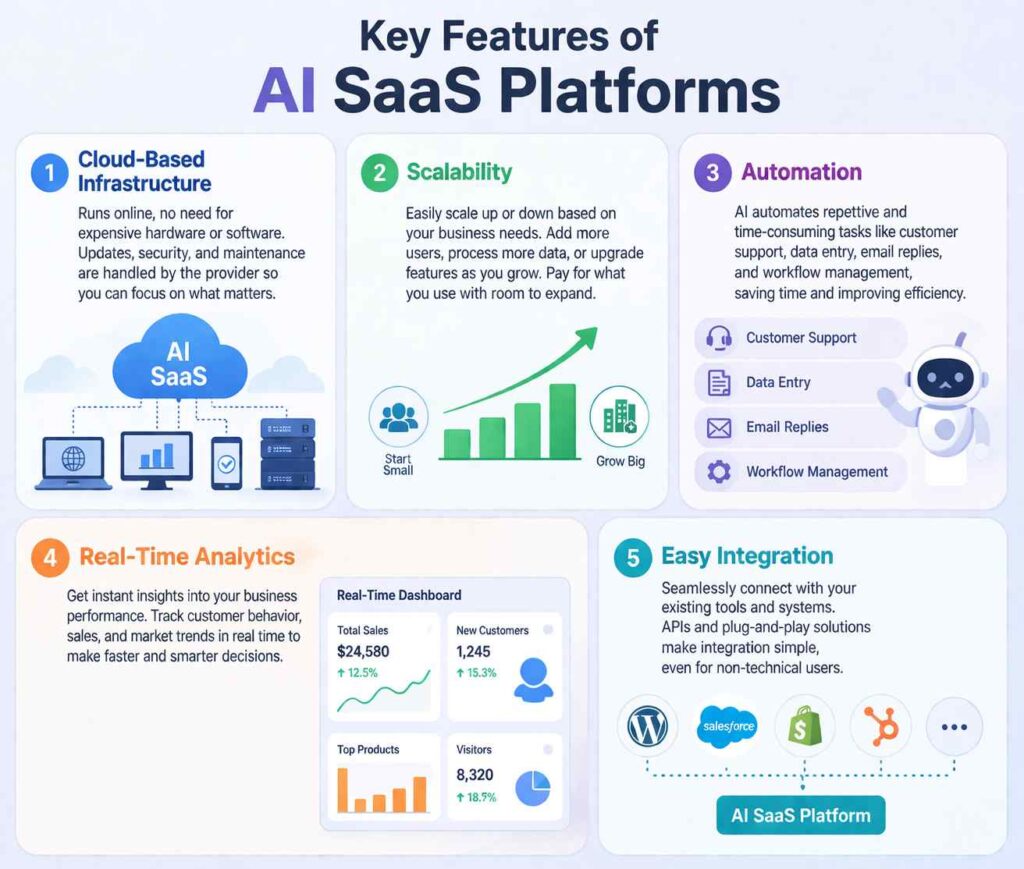
1. Cloud-Based Infrastructure
AI SaaS platforms are built on cloud-based infrastructure, which means everything runs online instead of on local machines. Users don’t need to worry about buying expensive hardware, installing software, or handling system maintenance. All updates, security patches, and technical management are handled by the service provider. This allows businesses to focus completely on using the AI tools rather than managing the technical side, making the whole system more convenient and efficient.
2. Scalability
One of the biggest advantages of AI SaaS platforms is their ability to scale easily according to business needs. Whether you are a small startup or a large enterprise, you can increase or decrease your usage based on demand. For example, you can add more users, process more data, or upgrade features as your business grows. This flexibility ensures that companies only pay for what they use while still having the option to expand without switching platforms.
3. Automation
AI SaaS tools are designed to automate repetitive and time-consuming tasks, allowing businesses to save time and focus on more important work. Tasks such as customer support, data entry, email replies, and workflow management can be handled automatically using AI systems. This not only reduces human workload but also improves accuracy and efficiency. As a result, employees can focus on creative and strategic tasks instead of routine operations.
4. Real-Time Analytics
AI SaaS platforms provide real-time analytics, which helps businesses make faster and more informed decisions. Instead of waiting for reports or manually analyzing data, users can instantly access insights about customer behavior, sales performance, and market trends. This immediate access to data allows companies to respond quickly to changes, identify opportunities, and improve their overall decision-making process.
5. Easy Integration
Most AI SaaS platforms are designed to easily integrate with existing tools and systems such as websites, CRM software, e-commerce platforms, and mobile applications. They often provide APIs and plug-and-play solutions that make integration simple even for non-technical users. This seamless connectivity ensures that businesses can adopt AI without completely changing their current workflows, making the transition smooth and efficient.
Benefits of AI SaaS Platforms
1. Cost Efficiency
Building AI systems from scratch is expensive. AI SaaS platforms eliminate the need for:
- Expensive hardware
- AI experts
- Long development cycles
You only pay for what you use.
2. Accessibility
Even small businesses can now use advanced AI tools without technical expertise. Many platforms offer user-friendly dashboards and drag-and-drop features.
3. Faster Deployment
AI SaaS solutions can be implemented quickly compared to traditional software. This allows businesses to start seeing results faster.
4. Continuous Updates
Service providers regularly update their platforms with new features and improvements, ensuring users always have access to the latest technology.
5. Improved Decision-Making
AI-driven insights help businesses:
- Predict trends
- Understand customer behavior
- Optimize operations
Popular Use Cases of AI SaaS Platforms
1. Customer Support
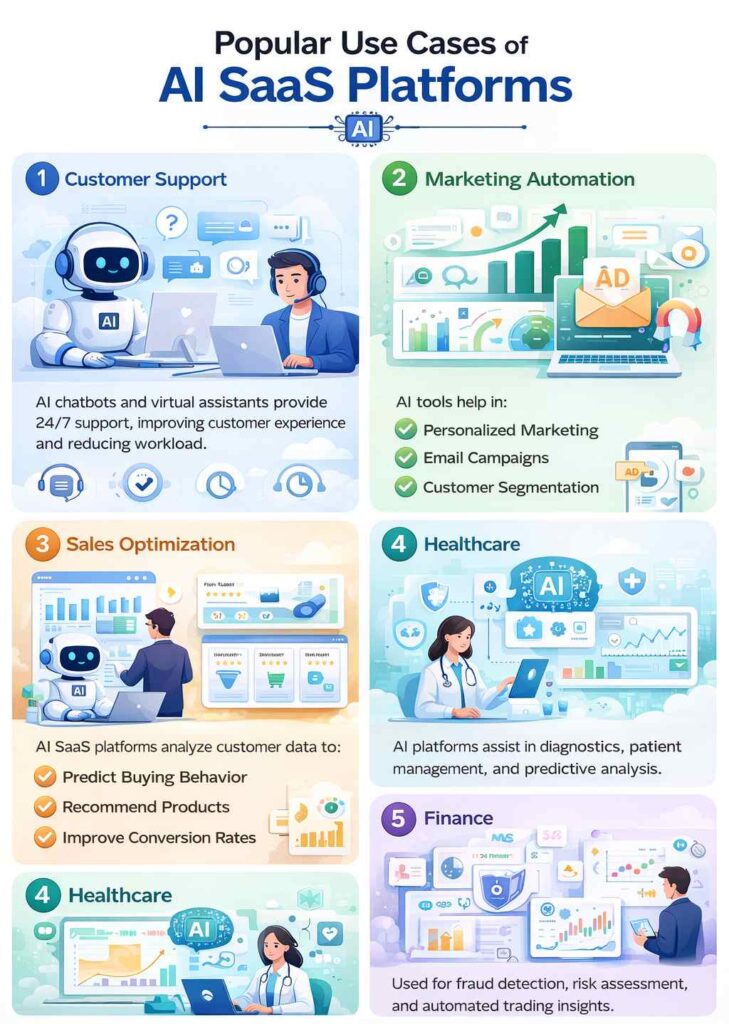
AI chatbots and virtual assistants provide 24/7 support, improving customer experience and reducing workload.
2. Marketing Automation
AI tools help in:
- Personalized marketing
- Email campaigns
- Customer segmentation
3. Sales Optimization
AI SaaS platforms analyze customer data to:
- Predict buying behavior
- Recommend products
- Improve conversion rates
4. Healthcare
AI platforms assist in diagnostics, patient management, and predictive analysis.
5. Finance
Used for fraud detection, risk assessment, and automated trading insights.
Challenges of AI SaaS Platforms
1. Data Privacy Concerns
AI systems require large amounts of data, which raises concerns about security and user privacy.
2. Dependency on Internet
Since these platforms are cloud-based, a stable internet connection is essential.
3. Limited Customization
Some platforms may not offer full flexibility for highly specific business needs.
4. Vendor Lock-In
Switching providers can be difficult once your business heavily depends on a specific platform.
How to Choose the Right AI SaaS Platform
When selecting an AI SaaS platform, consider:
Ease of Use – Is it beginner-friendly?
When choosing an AI SaaS platform, ease of use should be one of your top priorities. A platform with a simple interface, clear navigation, and user-friendly features allows you and your team to start using it without extensive training. Many modern AI tools offer drag-and-drop functionality, pre-built templates, and guided dashboards that make complex processes much easier to handle. If a platform is too complicated, it can slow down your workflow and reduce productivity, especially if you don’t have a technical background.
Integration Options – Does it work with your existing tools?
A good AI SaaS platform should seamlessly integrate with the tools and systems you already use, such as CRM software, email marketing tools, e-commerce platforms, or analytics systems. Strong integration capabilities ensure that data flows smoothly between different applications without manual effort. This not only saves time but also improves efficiency and accuracy. Before choosing a platform, check if it offers APIs, plugins, or built-in integrations that match your business ecosystem.
Pricing Model – Is it cost-effective for your budget?
Pricing is a crucial factor when selecting an AI SaaS platform. Different providers offer various pricing models, such as subscription-based plans, pay-as-you-go, or tiered pricing depending on usage. It’s important to evaluate what features are included in each plan and whether they align with your needs. While some platforms may seem affordable initially, hidden costs like add-ons, upgrades, or usage limits can increase expenses over time. Always choose a platform that provides good value for money without compromising essential features.
Scalability – Can it grow with your business?
As your business expands, your AI needs will also grow. That’s why scalability is an important consideration. A reliable AI SaaS platform should allow you to increase usage, add more users, or access advanced features without switching to a completely new system. Scalable platforms help you avoid disruptions and ensure long-term growth. Whether you’re a startup or an established company, choosing a solution that adapts to your future requirements is a smart investment.
Security Features – Does it protect your data?
Data security is critical when working with AI SaaS platforms, as they often handle sensitive business and customer information. A trustworthy platform should offer strong security measures such as data encryption, secure access controls, regular backups, and compliance with industry standards. It’s also important to understand how the platform stores and processes your data. Choosing a secure platform not only protects your business from cyber threats but also builds trust with your customers.
The Future of AI SaaS Platforms
The future of AI SaaS platforms looks incredibly promising. With advancements in AI technologies, we can expect:
- More personalized user experiences
- Smarter automation tools
- Increased adoption across industries
- Enhanced security and compliance features
Businesses that adopt AI SaaS early will have a competitive advantage in the market.
Conclusion
AI SaaS Platforms are transforming how businesses operate by making artificial intelligence more accessible, scalable, and cost-effective. From automation and analytics to customer engagement and decision-making, these platforms offer powerful tools that drive growth and efficiency.
While there are some challenges, the benefits far outweigh the drawbacks. As technology continues to evolve, AI SaaS platforms will become an essential part of every modern business strategy.
If you want to stay competitive in today’s digital world, adopting AI SaaS platforms is no longer an option—it’s a necessity.

Leave a Reply