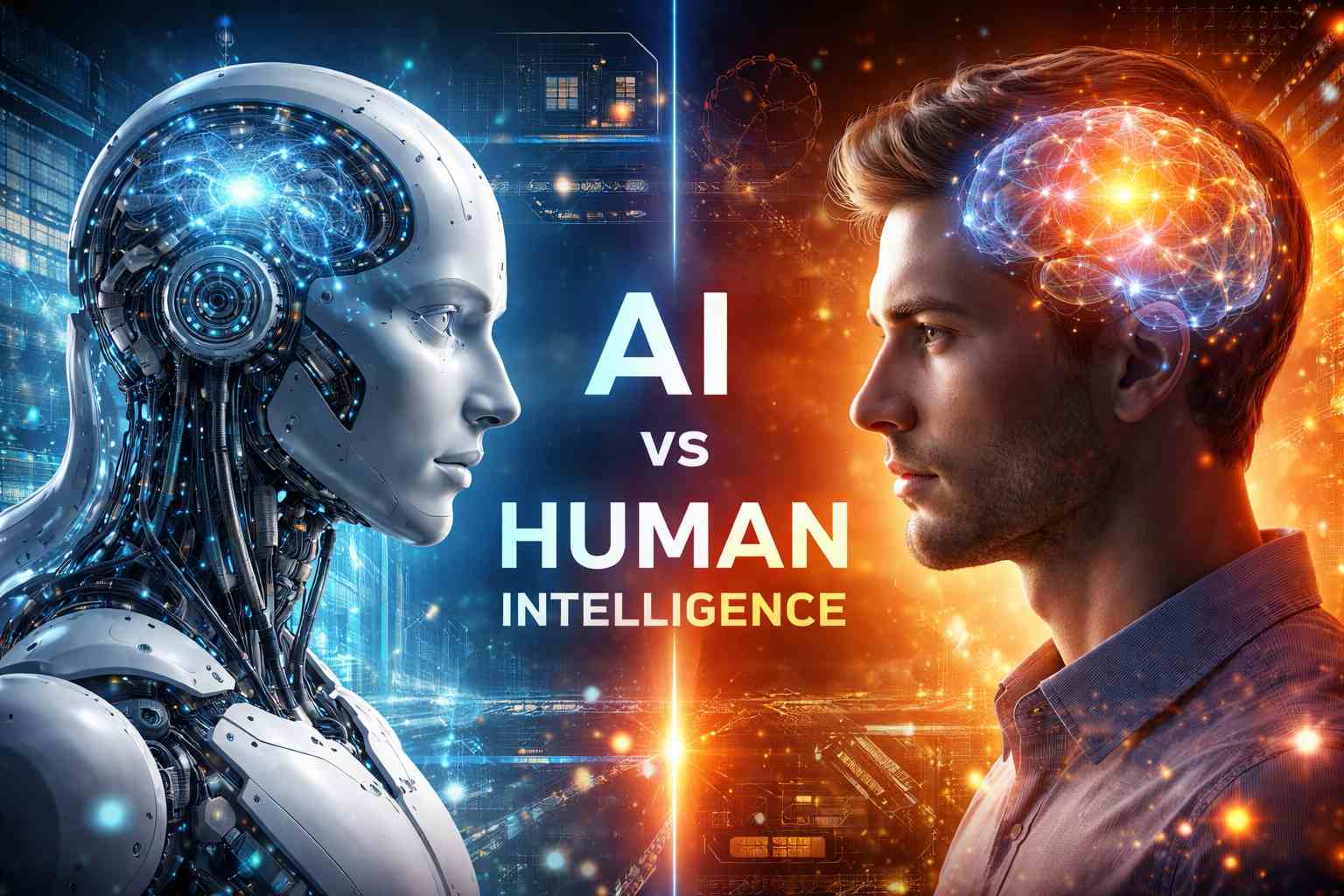
AI vs Human Intelligence: Artificial Intelligence (AI) is rapidly transforming the way we live, work, and think. From chatbots and recommendation systems to self-driving cars, AI is becoming deeply embedded in our daily lives. But how does it really compare to human intelligence? Can machines truly think like humans—or even surpass us?
In this detailed, SEO-friendly guide, we’ll explore AI vs human intelligence across multiple dimensions, breaking down each aspect clearly to help you understand the similarities, differences, strengths, and limitations.
What is Artificial Intelligence?
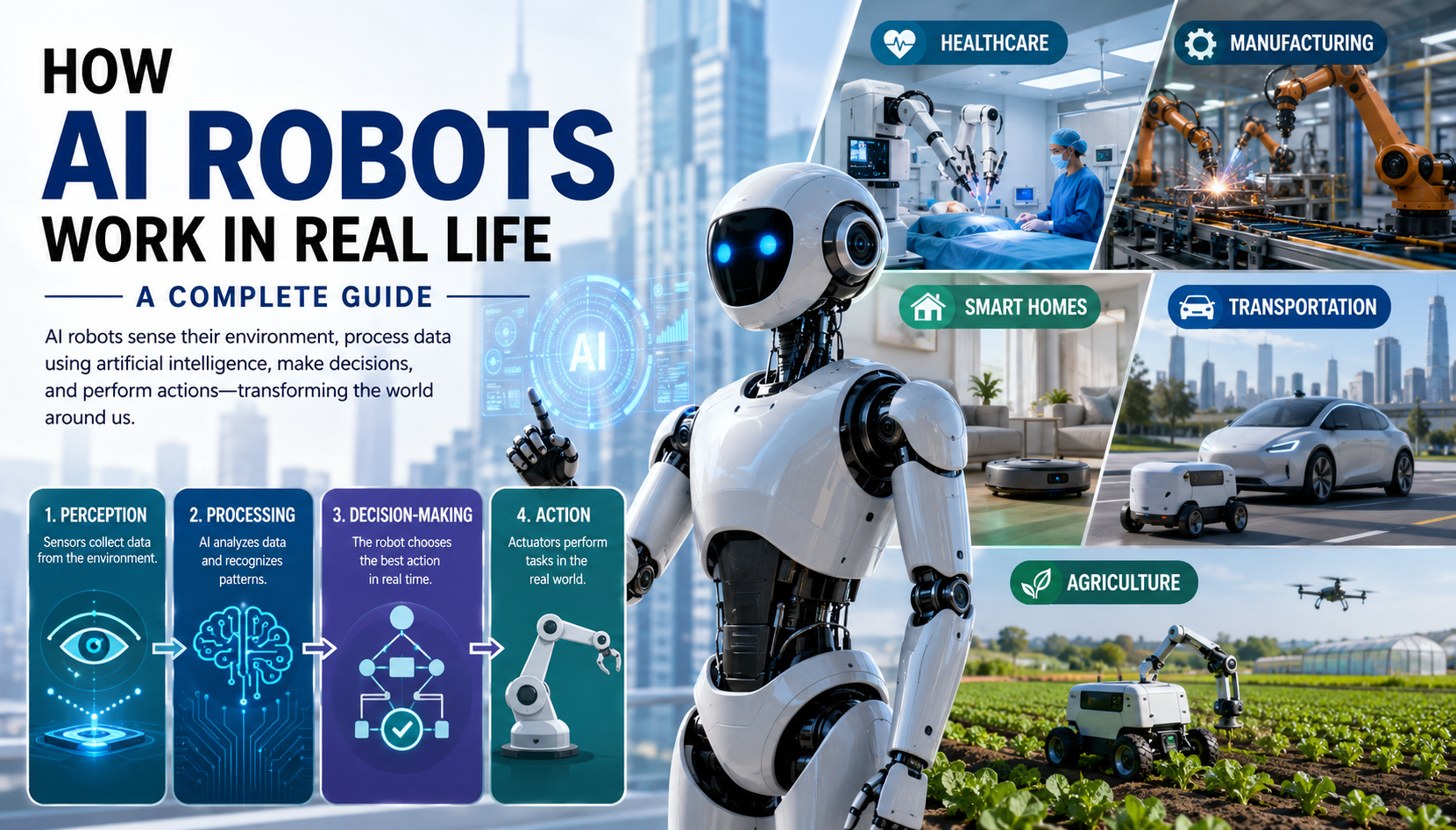
Artificial Intelligence refers to the simulation of human intelligence in machines that are programmed to think, learn, and solve problems. AI systems use algorithms, data, and computational power to perform tasks that typically require human intelligence.
Key Features of AI:
- Data-driven learning
- Pattern recognition
- Automation of repetitive tasks
- High-speed processing
- Scalability
Examples include virtual assistants, image recognition systems, and predictive analytics tools.
What is Human Intelligence?
Human intelligence is the natural cognitive ability of humans to learn, reason, understand, and adapt to new situations. It is shaped by emotions, experiences, consciousness, and social interactions.
Key Features of Human Intelligence:
- Emotional understanding
- Creativity and imagination
- Moral reasoning
- Conscious awareness
- Adaptability in unpredictable situations
AI vs Human Intelligence: Key Differences
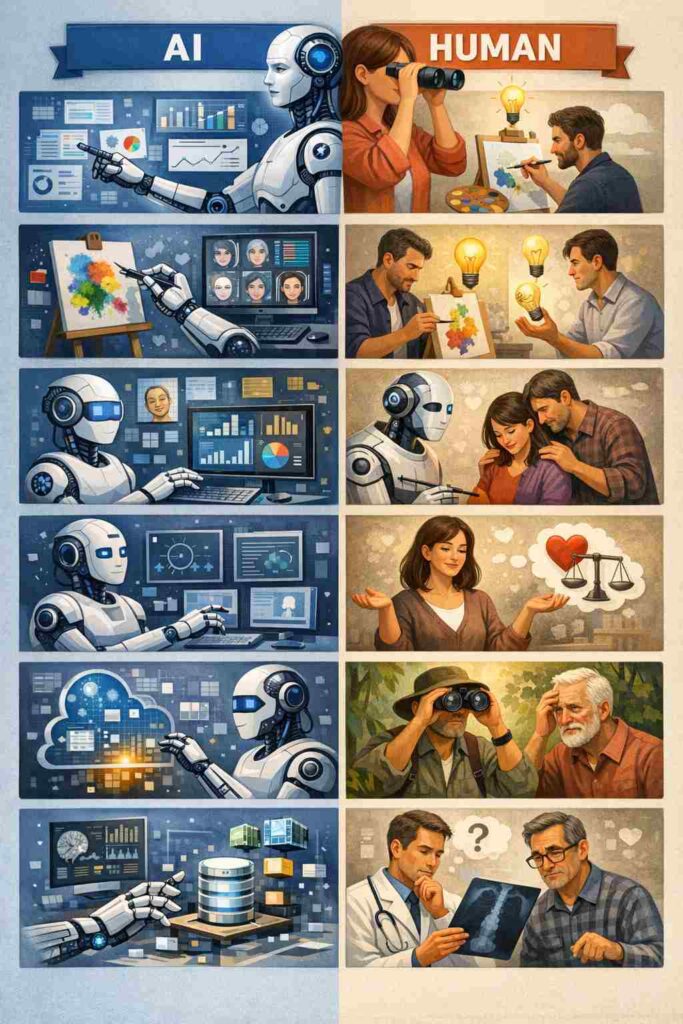
1. Learning Ability
Artificial Intelligence:
AI learns through data and algorithms. It requires large datasets and training models to improve performance. Once trained, it can process new data efficiently.
Human Intelligence:
Humans learn from experience, observation, and intuition. Even with limited data, humans can generalize and make decisions.
👉 Conclusion: Humans are more flexible learners, while AI excels in structured, data-heavy environments.
2. Creativity and Innovation
Artificial Intelligence:
AI can generate content, art, and music—but it relies on existing data patterns. It lacks true originality.
Human Intelligence:
Humans can think outside the box, imagine new ideas, and create something entirely novel.
👉 Conclusion: Human creativity remains unmatched.
3. Emotional Intelligence
Artificial Intelligence:
AI can recognize emotions (e.g., through facial recognition or sentiment analysis), but it does not feel emotions.
Human Intelligence:
Humans experience emotions deeply and use them in decision-making, relationships, and empathy.
👉 Conclusion: Emotional intelligence is a uniquely human strength.
4. Speed and Efficiency
Artificial Intelligence:
AI processes vast amounts of data in seconds and performs repetitive tasks without fatigue.
Human Intelligence:
Humans are slower in processing large datasets and can get tired or distracted.
👉 Conclusion: AI dominates in speed and efficiency.
5. Decision-Making
Artificial Intelligence:
AI makes decisions based on data, logic, and algorithms. It lacks ethical judgment unless programmed.
Human Intelligence:
Humans consider emotions, ethics, experience, and social context.
👉 Conclusion: Humans provide more balanced and ethical decisions.
6. Adaptability
Artificial Intelligence:
AI performs well in predefined environments but struggles with unexpected scenarios unless retrained.
Human Intelligence:
Humans adapt quickly to new and uncertain situations.
👉 Conclusion: Humans are more adaptable in dynamic environments.
7. Memory and Storage
Artificial Intelligence:
AI has virtually unlimited memory and can store vast amounts of data accurately.
Human Intelligence:
Human memory is limited and can be influenced by biases and forgetfulness.
👉 Conclusion: AI excels in memory and data storage.
8. Accuracy and Error Rate
Artificial Intelligence:
AI systems can achieve high accuracy, especially in tasks like medical diagnosis or data analysis.
Human Intelligence:
Humans are prone to errors due to fatigue, bias, or lack of information.
👉 Conclusion: AI is more accurate in repetitive and data-driven tasks.
Similarities Between AI and Human Intelligence
Despite their differences, AI and human intelligence share some similarities:
- Both can learn and improve over time
- Both can solve problems
- Both can recognize patterns
- Both can make decisions based on input
However, the mechanisms behind these abilities are fundamentally different.
Can AI Replace Human Intelligence?
This is one of the most debated questions today.
Where AI Can Replace Humans:
- Repetitive tasks
- Data analysis
- Customer support automation
- Manufacturing processes
Where Humans Are Irreplaceable:
- Emotional connections
- Leadership and ethics
- Creative thinking
- Complex decision-making
👉 Final Thought: AI is more likely to augment human intelligence rather than replace it entirely.
Future of AI and Human Intelligence
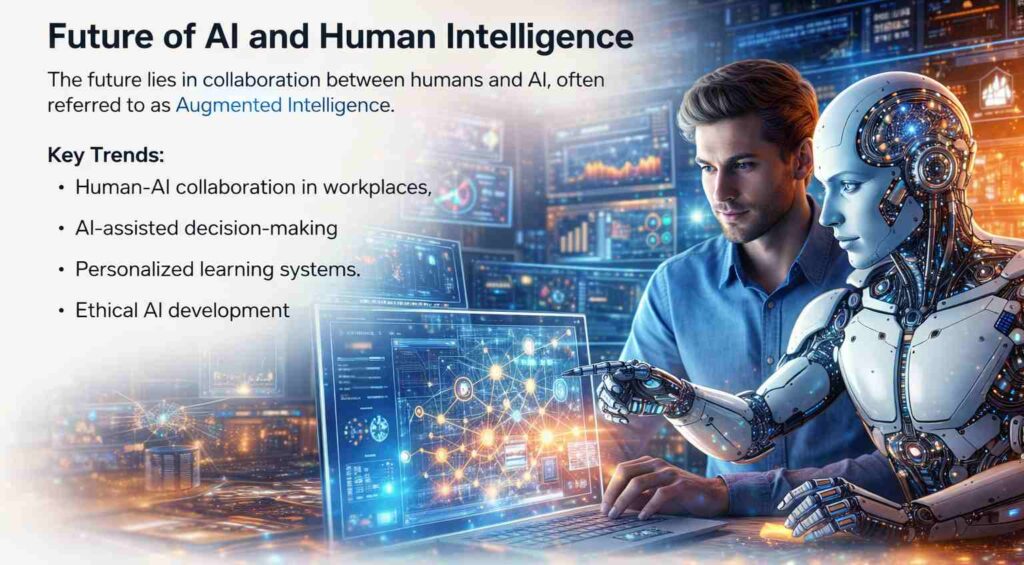
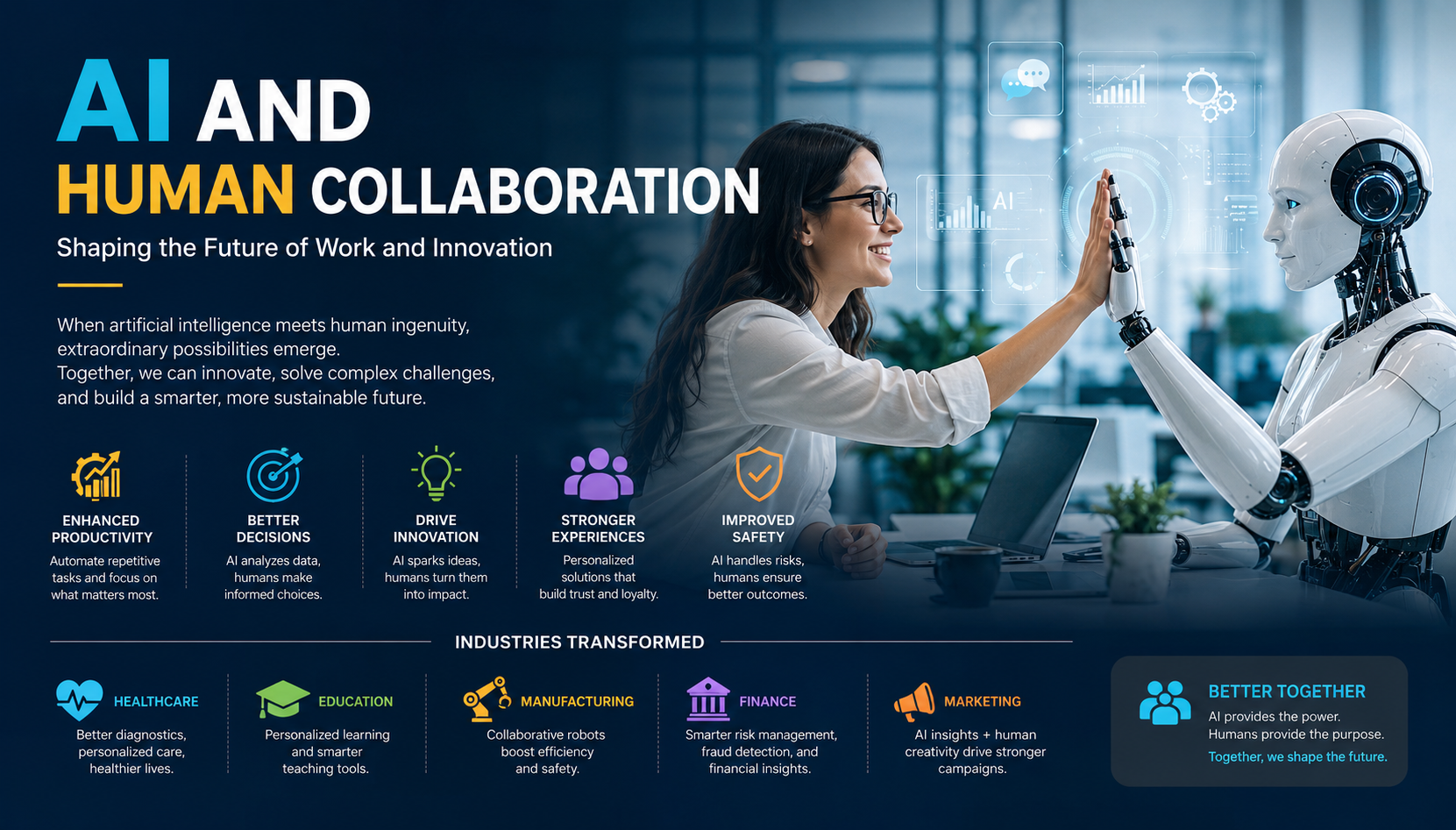
The future of artificial intelligence and human intelligence is not about competition, but collaboration—often described as augmented intelligence, where machines enhance human capabilities rather than replace them. In modern workplaces, this is already visible as humans and AI systems work side by side to boost productivity, automate repetitive tasks, and allow people to focus on creativity and strategic thinking.
AI-assisted decision-making is becoming more powerful, using data-driven insights to help professionals in fields like healthcare, finance, and marketing make faster and more accurate choices. At the same time, personalized learning systems are transforming education by adapting content to individual needs, helping learners progress at their own pace.
However, as AI becomes more integrated into daily life, the importance of ethical AI development grows—ensuring transparency, fairness, and accountability in how these systems operate. Ultimately, the future will be defined by a strong partnership where humans provide judgment, empathy, and creativity, while AI contributes speed, precision, and scalability to solve complex global challenges.
Pros and Cons of AI vs Human Intelligence
Advantages of AI:
- High speed and accuracy
- No fatigue
- Handles big data efficiently
- Automates repetitive tasks
Disadvantages of AI:
- Lack of emotions and creativity
- Dependent on data quality
- Limited adaptability
Advantages of Human Intelligence:
- Creativity and imagination
- Emotional depth
- Ethical reasoning
- Flexibility
Disadvantages of Human Intelligence:
- Slower processing
- Prone to errors
- Limited memory
Conclusion
The comparison between AI and human intelligence highlights a clear reality: both have unique strengths and limitations. AI excels in speed, data processing, and accuracy, while humans dominate in creativity, emotional intelligence, and adaptability.
Instead of viewing AI as a replacement, it’s more productive to see it as a powerful tool that enhances human capabilities. The future belongs to those who can effectively combine the strengths of both.

Leave a Reply