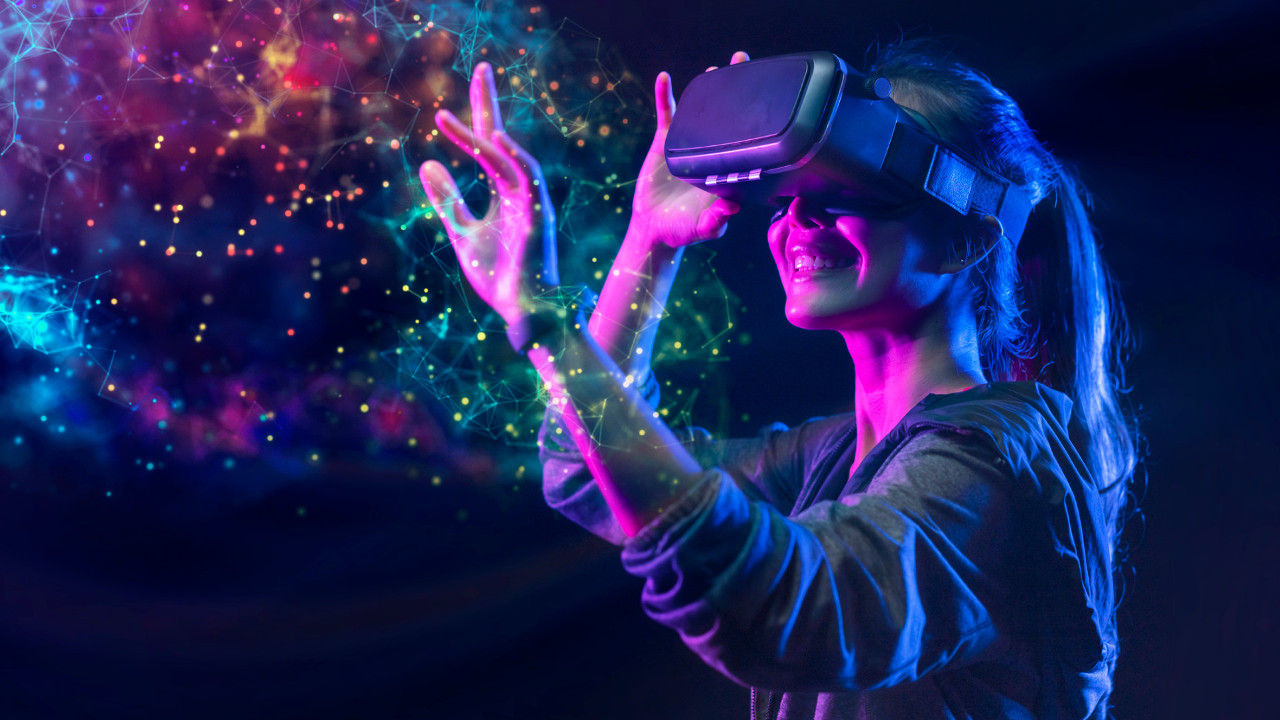
Ai in Virtual Reality: Artificial Intelligence (AI) and Virtual Reality (VR) are two of the most exciting technologies shaping the future. While VR creates immersive digital environments, AI makes those environments smarter and more interactive. Together, they are revolutionizing industries like gaming, healthcare, education, and business.
This article explores how AI enhances VR, its key applications, benefits, challenges, and what the future holds.
What is Virtual Reality (VR)?
Ai in Virtual Reality:Virtual Reality (VR) is a technology that allows users to experience a simulated environment through devices like VR headsets. It creates a 3D world where users can interact with objects and surroundings as if they were real.
What is Artificial Intelligence (AI)?
Artificial Intelligence (AI) refers to machines or systems that can perform tasks that typically require human intelligence, such as learning, decision-making, problem-solving, and understanding language.
How AI Enhances Virtual Reality
1. Intelligent Virtual Environments
Ai in Virtual Reality AI transforms virtual environments from static, pre-designed spaces into dynamic worlds that can respond in real time. These environments can analyze user behavior—such as movement patterns, choices, and interactions—and adjust accordingly.
For example, in a VR training simulation, the system can increase or decrease difficulty based on the user’s performance. In gaming, environments may change weather, lighting, or challenges depending on how a player behaves. This creates a more engaging and lifelike experience where no two sessions feel exactly the same.
AI also enables predictive behavior, meaning the system can anticipate user actions and prepare responses in advance, making the environment feel more natural and seamless.
2. Realistic Characters (NPCs)
Non-player characters (NPCs) in traditional VR or games often follow fixed scripts, which can make interactions feel repetitive. AI changes this by giving NPCs the ability to learn, adapt, and respond intelligently.
AI-powered NPCs can:
- Understand natural language and respond in real time
- Show emotions through facial expressions and body language
- Remember past interactions with users
- Make decisions based on context
For instance, in a VR role-playing game, an NPC shopkeeper might offer different deals depending on your past behavior or reputation. In training simulations, virtual humans can act unpredictably, preparing users for real-world scenarios.
3. Natural Interaction
One of the biggest limitations of early VR systems was the reliance on controllers. AI helps remove this barrier by enabling more natural forms of interaction.
With AI, users can:
- Use voice commands to control the environment
- Interact through hand gestures and body movements
- Communicate using facial expressions
Technologies like speech recognition and gesture tracking allow users to interact with virtual objects as they would in the real world. For example, you can pick up an object, open a door, or talk to a virtual assistant without pressing buttons.
Ai in Virtual Reality: This makes VR more intuitive, especially for beginners, and increases accessibility for users who may find traditional controls difficult.
4. Personalized Experiences
Ai in Virtual Reality plays a crucial role in making VR experiences unique for each user. By analyzing data such as preferences, behavior, and performance, AI can tailor the experience to individual needs.
In gaming, AI can adjust difficulty levels, recommend missions, or change storylines based on player choices. In education, it can adapt lessons to match a student’s learning pace and style.
For example:
- A beginner user may receive guided instructions and easier challenges
- An advanced user may face complex scenarios and minimal guidance
This level of personalization keeps users engaged and improves outcomes, whether the goal is entertainment, learning, or training.
5. Computer Vision Integration
Computer vision is a branch of AI that allows machines to interpret and understand visual information. In VR, it plays a key role in enhancing realism and interaction.
AI-powered computer vision can:
- Track user movements with high accuracy
- Recognize objects and gestures
- Map physical spaces into virtual environments
- Improve hand and eye coordination tracking
For example, VR systems can detect your hand movements and replicate them in the virtual world, allowing you to grab or manipulate objects naturally. Some advanced systems even scan your real-world surroundings and integrate them into Ai in Virtual Reality, creating a mixed reality experience.
This technology significantly improves spatial awareness, making interactions smoother and more realistic.
Key Applications of AI in Virtual Reality
1. Gaming and Entertainment
AI-driven VR games provide realistic gameplay with intelligent enemies, adaptive storylines, and immersive environments.
2. Healthcare
- VR simulations for surgical training
- AI-powered therapy for mental health (e.g., PTSD, anxiety)
- Rehabilitation programs using interactive environments
3. Education and Training
- Virtual classrooms with AI tutors
- Real-world simulations for skill training (pilots, engineers, doctors)
- Personalized learning experiences
4. Business and Marketing
- Virtual showrooms powered by AI recommendations
- Customer behavior analysis in virtual environments
- Interactive product demonstrations
5. Real Estate and Architecture
- Virtual property tours
- AI-assisted design and planning
- Real-time customization of interiors
6. Military and Defense
- Training simulations
- AI-based decision-making scenarios
- Risk-free combat practice environments
Benefits of AI in Virtual Reality
1. Enhanced Immersion
One of the biggest advantages of combining AI with VR is the level of immersion it creates. Ai in Virtual Reality brings virtual environments to life by making them responsive, intelligent, and dynamic.
Instead of interacting with a static world, users experience environments that react to their actions in real time. For example, lighting can change based on movement, objects can behave realistically, and virtual characters can respond naturally.
This deeper sense of presence makes users feel as if they are truly inside the virtual world, which is especially valuable in gaming, simulations, and storytelling.
2. Better User Experience
Ai in Virtual Reality significantly improves the overall user experience by making VR systems more intuitive and user-friendly. Through data analysis, AI understands user behavior, preferences, and interaction patterns.
This allows VR applications to:
- Adjust content based on user skill level
- Provide helpful suggestions or guidance
- Create smoother and more responsive interactions
For instance, a VR learning platform can detect when a user is struggling and offer additional support, while a game can modify its difficulty to keep players engaged without frustration.
The result is a more satisfying and enjoyable experience tailored to each individual.
3. Cost Efficiency
AI-powered VR can greatly reduce costs, especially in industries that rely on training and simulations. Traditional training methods often require physical resources, equipment, and real-world setups, which can be expensive and time-consuming.
With AI and VR:
- Training can be conducted in a fully virtual environment
- Risky scenarios can be simulated safely
- Resources can be reused multiple times
For example, medical students can practice surgeries in VR without needing actual operating rooms, and pilots can train using flight simulators instead of real aircraft.
This not only saves money but also reduces risks and improves accessibility.
4. Scalability
AI enables VR systems to scale efficiently, meaning they can support a large number of users and complex scenarios without losing performance.
In multi-user environments, such as virtual classrooms or business meetings, Ai in Virtual Reality can:
- Manage interactions between users
- Optimize system performance
- Adapt environments for different participants simultaneously
For example, a virtual training program can be used by thousands of employees across different locations, each receiving a personalized experience.
This scalability makes AI-powered VR a powerful tool for organizations looking to expand their operations and reach.
5. Improved Learning Outcomes
AI-driven VR is particularly effective in education and training because it combines immersion with personalization. This leads to better understanding and higher retention of information.
Interactive learning environments allow users to:
- Learn by doing rather than just observing
- Practice skills in realistic scenarios
- Receive instant feedback and guidance
AI further enhances this by adapting the content to match the learner’s pace and style. For example, if a student struggles with a concept, the system can provide additional explanations or exercises.
Studies have shown that immersive and interactive learning methods can significantly improve memory retention compared to traditional approaches.
Challenges of AI in Virtual Reality
1. High Development Cost
Combining AI and VR requires advanced technology and skilled professionals.
2. Data Privacy Concerns
Ai in Virtual Reality (AI) systems collect user data, raising privacy and security issues.
3. Hardware Limitations
VR devices can be expensive and require powerful systems.
4. Complexity
Developing intelligent VR environments is technically challenging.
5. Ethical Issues
AI decisions in virtual environments must be transparent and fair.
Future of AI in Virtual Reality
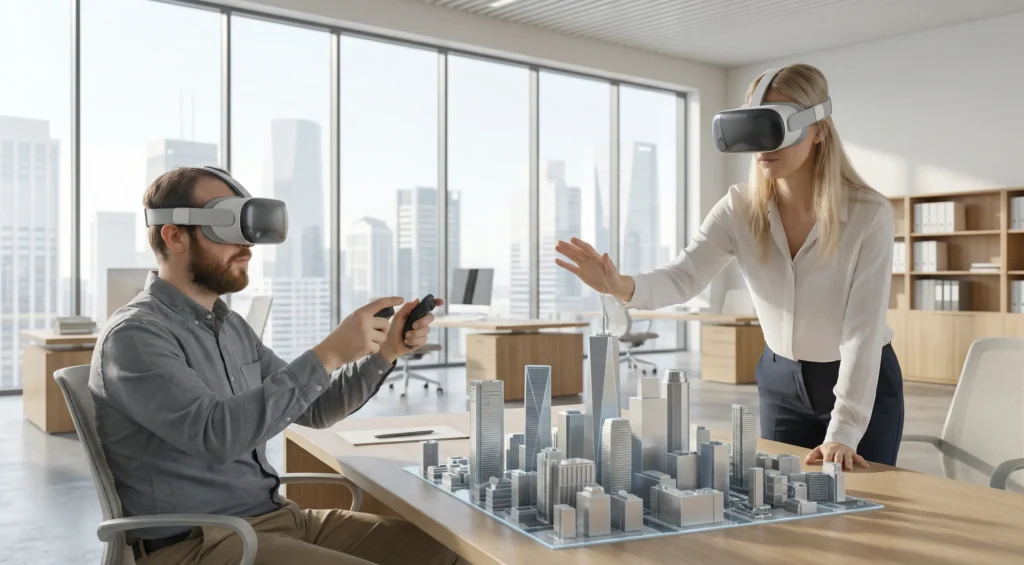
The future of AI in VR is incredibly promising. Some expected advancements include:
- Fully immersive metaverse experiences
- AI-driven virtual assistants in VR
- Hyper-realistic avatars and environments
- Brain-computer interface integration
- More affordable and accessible VR devices
As technology evolves, AI and VR will become more integrated, creating experiences that are nearly indistinguishable from reality.
Conclusion
AI in Virtual Reality is transforming how we interact with digital worlds. By combining intelligence with immersion, this powerful duo is reshaping industries and opening new possibilities for innovation. While challenges remain, the benefits and future potential make AI-powered VR a cornerstone of the next technological revolution.

Leave a Reply