

The real estate industry is evolving rapidly, and one of the biggest drivers of change is AI in Real Estate. Artificial Intelligence is transforming how properties are bought, sold, managed, and marketed. From smart property recommendations to predictive market analysis, AI is helping agents, brokers, investors, and property managers make faster and smarter decisions. As technology becomes more accessible, businesses that embrace AI are gaining a strong competitive advantage.
In this complete guide, we will explore how AI in Real Estate works, its benefits, practical applications, challenges, and why it is becoming essential for success in today’s market.
What is AI in Real Estate?
AI in Real Estate refers to the use of artificial intelligence technologies such as machine learning, natural language processing, automation, and predictive analytics to improve processes within the property sector. AI systems can analyze massive amounts of market data, customer behavior, pricing trends, and property details much faster than humans.
These tools help real estate professionals automate repetitive tasks, improve customer experiences, and make more accurate business decisions. Whether it is generating leads, evaluating investments, or managing tenant communication, AI is becoming a valuable tool across every part of the real estate business.
Why AI in Real Estate is Important
The real estate market involves large transactions, complex decisions, and constant market changes. Traditional methods often rely heavily on manual work and personal experience. While experience remains valuable, AI adds speed, data-driven insights, and efficiency.
Using AI in Real Estate helps reduce human error, save time, and uncover opportunities that might otherwise be missed. Buyers receive better property matches, sellers get smarter pricing strategies, and investors gain more confidence through accurate forecasts.
Key Benefits of AI in Real Estate
Improved Property Valuation
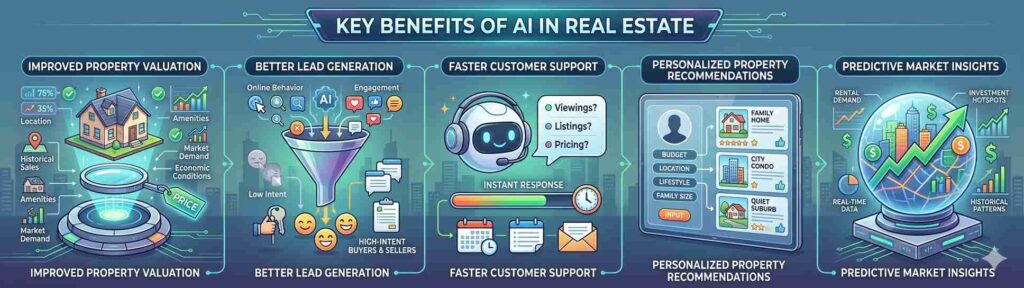
One of the most useful applications of AI in Real Estate is property valuation. AI tools analyze factors such as location, historical sales, nearby amenities, market demand, and economic conditions to estimate property value more accurately. This helps sellers price competitively and buyers make informed offers.
Better Lead Generation
Real estate professionals spend a lot of time finding and qualifying leads. AI can identify high-intent buyers and sellers based on online behavior, search activity, and customer engagement. This allows agents to focus on leads that are more likely to convert into sales.
Faster Customer Support
AI-powered chatbots and virtual assistants provide instant responses to customer inquiries. They can answer questions about listings, schedule property viewings, collect contact information, and guide users through the buying process. This improves response time and customer satisfaction.
Personalized Property Recommendations
Modern buyers expect personalized experiences. AI systems can recommend homes based on budget, location preference, lifestyle needs, family size, and browsing behavior. This saves time for buyers and increases conversion rates for agents.
Predictive Market Insights
Another major advantage of AI in Real Estate is predictive analytics. AI can identify market trends, future pricing movements, rental demand, and investment hotspots by studying historical and real-time data. Investors can use these insights to make smarter decisions.
How AI is Used in Real Estate Marketing
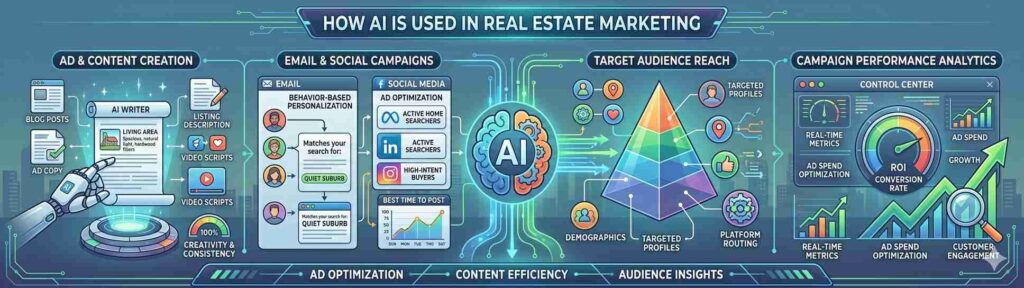
Marketing is one of the areas where AI in Real Estate has created the biggest impact. AI tools can generate ad copy, optimize campaigns, analyze customer engagement, and target the right audience across platforms.
Email campaigns become more effective because AI can personalize messages based on user behavior. Social media ads can be optimized automatically to reach people who are actively searching for homes. AI can also suggest the best times to post content and improve overall campaign performance.
Content creation tools powered by AI help agencies produce blogs, listing descriptions, video scripts, and SEO content quickly. This saves time while maintaining consistent marketing efforts.
AI in Property Management
Property managers are also benefiting from AI in Real Estate. AI software can automate rent reminders, maintenance scheduling, tenant communication, and lease renewals.
Smart systems can predict maintenance issues before they become expensive problems. For example, AI can detect patterns in HVAC performance or utility usage and alert managers early. This reduces costs and improves tenant satisfaction.
Tenant screening is another valuable use case. AI can review applications, verify income, analyze credit risk, and flag potential issues faster than manual processes.
AI in Real Estate Sales
Sales teams use AI in Real Estate to improve efficiency and close more deals. AI-powered CRM systems can track leads, prioritize follow-ups, and recommend the next best action for each prospect.
Voice assistants can transcribe meetings, summarize calls, and schedule appointments automatically. Sales agents can spend more time building relationships while AI handles repetitive administrative work.
AI can also analyze buyer preferences and predict which listings are most likely to attract certain clients, increasing the chances of successful deals.
AI for Real Estate Investors
Investors rely heavily on data, and AI in Real Estate gives them a major advantage. AI tools can analyze rental yields, neighborhood growth, vacancy rates, price appreciation, and economic indicators across multiple locations.
Instead of manually comparing hundreds of properties, investors can use AI to narrow down the best opportunities quickly. Risk assessment models can also help avoid poor investments by highlighting warning signs.
For portfolio owners, AI can recommend when to buy, sell, renovate, or refinance properties based on market conditions.
AI in Commercial Real Estate
Commercial real estate involves large-scale decisions, and AI in Real Estate is making these decisions smarter. AI helps with space optimization, tenant retention analysis, lease management, and market forecasting.
Businesses can use AI to determine the best office locations based on employee commuting patterns, demographics, and customer traffic. Retail property owners can analyze visitor behavior to improve store layouts and rental strategies.
Challenges of AI in Real Estate
Although the benefits are significant, there are some challenges to consider. Data privacy is a major concern because AI systems rely on customer and property data. Businesses must ensure they follow legal and ethical standards.
Another challenge is implementation cost. Some advanced AI tools require investment in software, training, and integration with existing systems. Smaller agencies may need time to adapt.
There is also the importance of human judgment. While AI in Real Estate can provide recommendations, relationships, negotiations, and emotional decisions still require human expertise.
How to Start Using AI in Real Estate
Businesses interested in adopting AI in Real Estate should begin with simple solutions that solve immediate problems. For example, start with AI chatbots for lead capture, automated CRM systems, or pricing tools.
Next, evaluate where time is being wasted in daily operations. If repetitive tasks are slowing productivity, automation can deliver quick wins. If lead quality is poor, AI targeting tools may help.
Training your team is equally important. Employees should understand how AI tools work and how to combine them with human expertise.
Future of AI in Real Estate
The future of AI in Real Estate looks highly promising. As technology improves, we can expect more advanced virtual property tours, voice-based property search, smarter investment forecasting, and fully automated workflows.
AI may soon help buyers complete transactions faster, simplify mortgage approvals, and create highly personalized real estate experiences. Agencies that adopt AI early will likely stay ahead of competitors.
Final Thoughts
AI in Real Estate is no longer just a trend—it is becoming a necessity for growth and efficiency. Whether you are an agent, broker, investor, or property manager, AI can help streamline operations, improve customer service, and make smarter decisions.
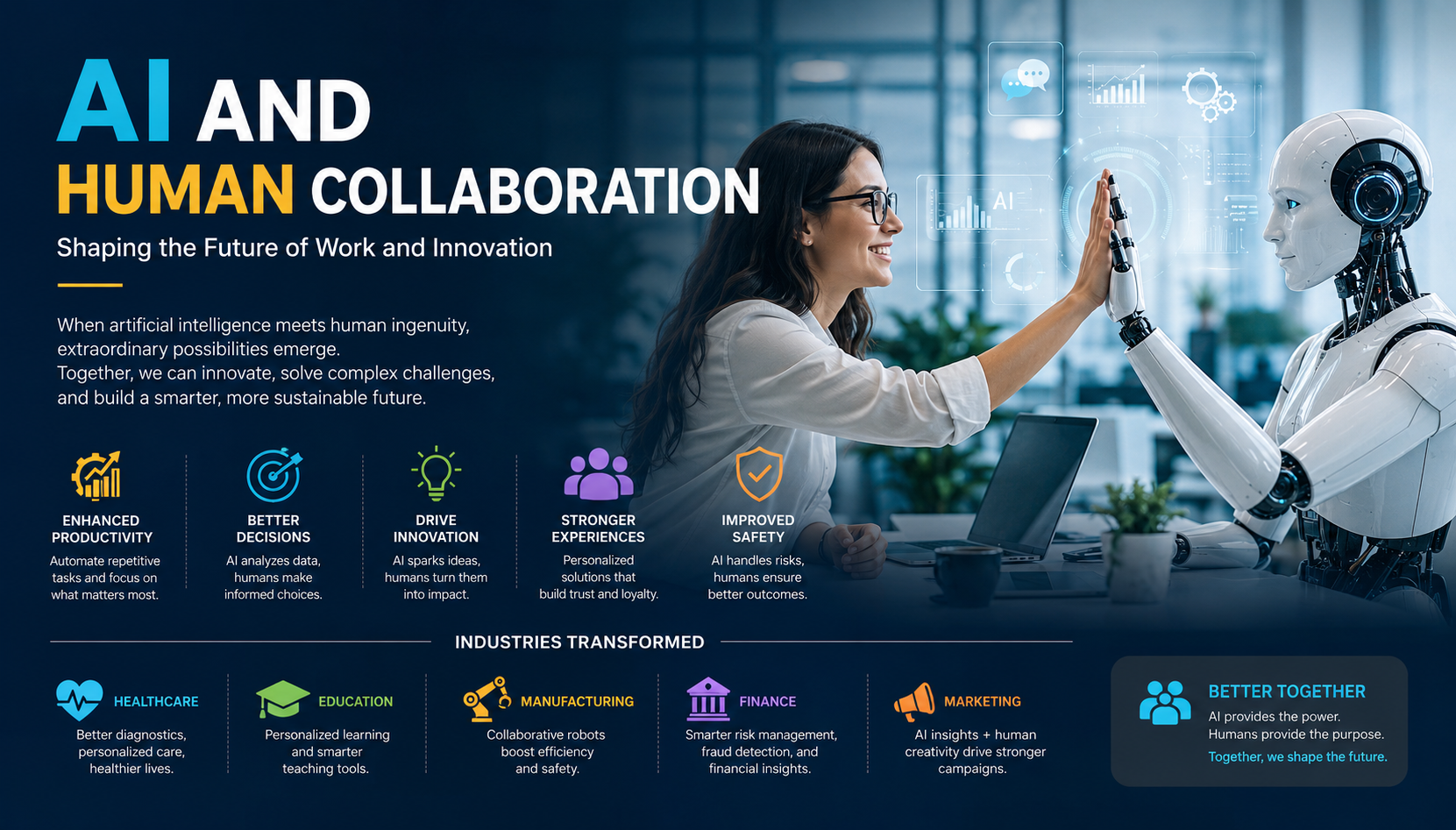
The key is to use AI as a tool that enhances human expertise rather than replaces it. Real estate will always depend on trust, relationships, and experience, but AI can make those strengths even more powerful.
Businesses that start using AI in Real Estate today will be better prepared for the future of the property market.

Leave a Reply