
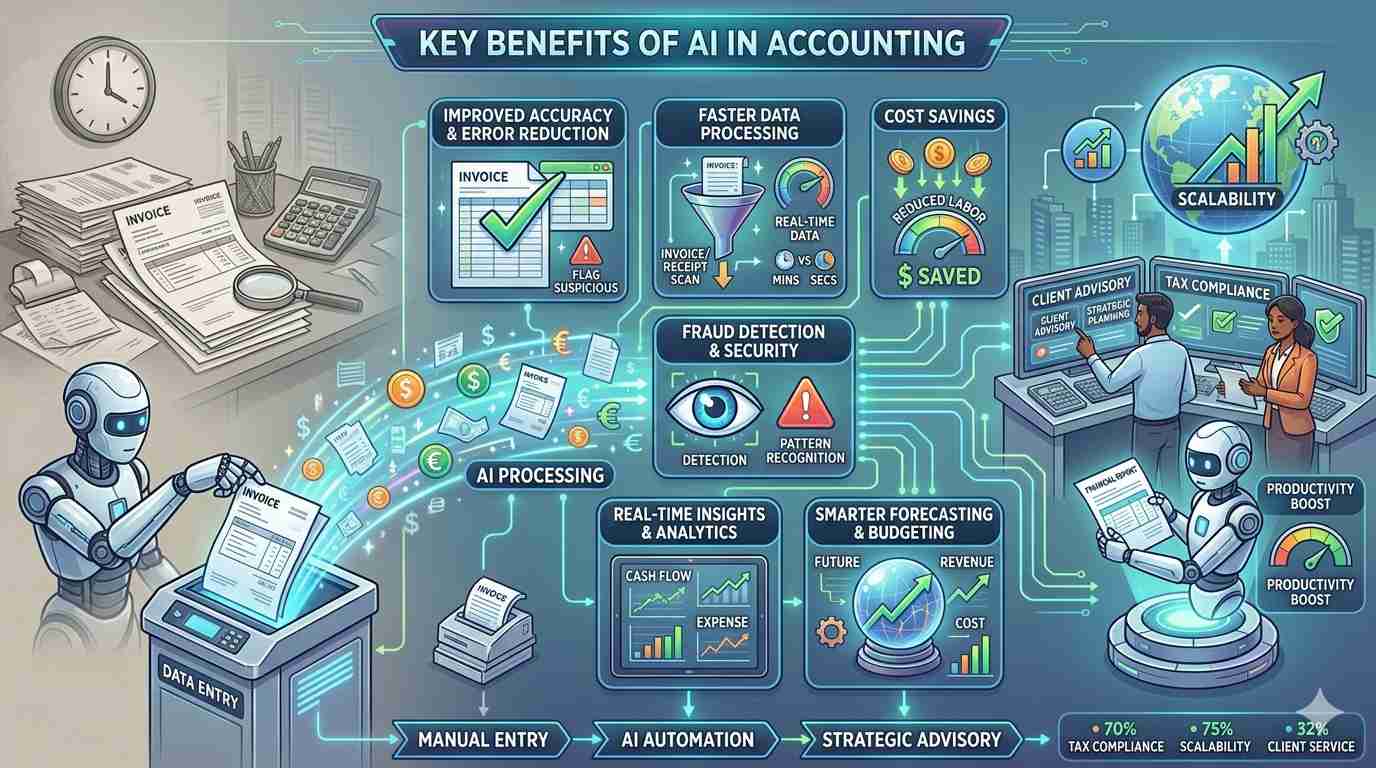
The world of finance is changing quickly, and one of the biggest drivers of this change is AI in Accounting. Businesses of all sizes are now using artificial intelligence to improve financial processes, reduce errors, and save valuable time. From automating repetitive tasks to providing real-time insights, AI is helping accountants work smarter instead of harder.
In the past, accounting required hours of manual data entry, calculations, and reviewing records. Today, advanced AI tools can perform many of these tasks faster and more accurately. This allows accounting professionals to focus on strategy, planning, and decision-making rather than spending all their time on paperwork.
In this article, we will explore the key benefits of AI in Accounting and why it is becoming essential for modern businesses.
1. Improved Accuracy and Fewer Errors
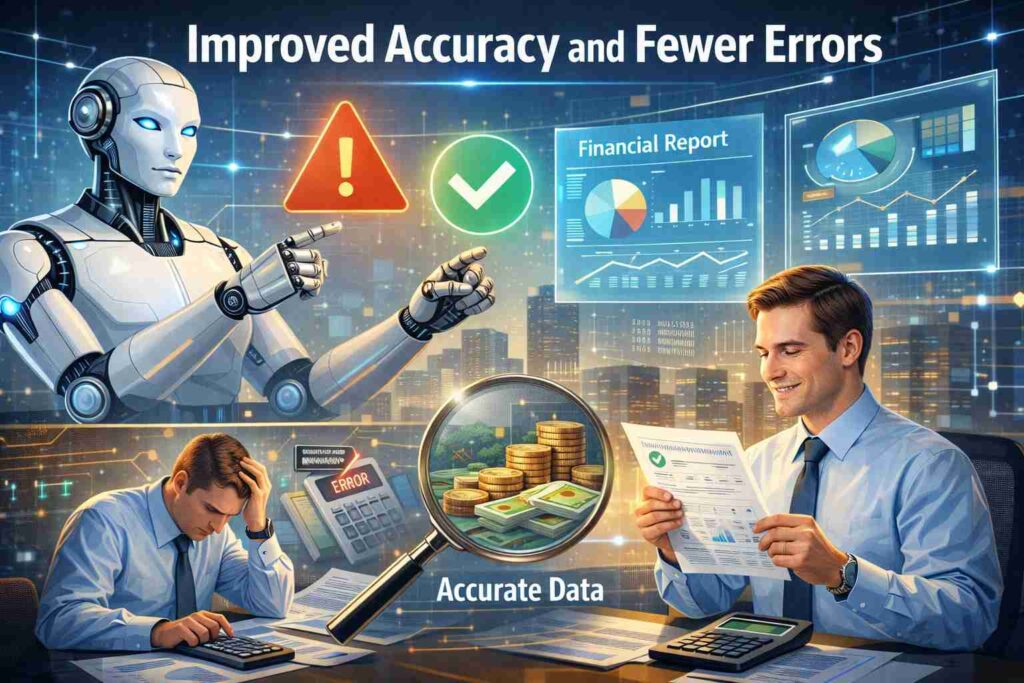
One of the biggest benefits of AI in Accounting is improved accuracy. Manual accounting tasks often lead to mistakes such as incorrect data entry, duplicate transactions, or calculation errors. Even small mistakes can create serious financial issues over time.
AI-powered systems can process large amounts of data with a high level of precision. They can detect inconsistencies, flag suspicious entries, and ensure that records remain accurate. This reduces the risk of human error and helps businesses maintain cleaner financial statements.
When companies rely on accurate numbers, they can make better financial decisions with confidence.
2. Faster Data Processing
Traditional accounting processes can be time-consuming, especially when handling invoices, receipts, payroll, and bank reconciliations. AI can complete these tasks within seconds.
With AI in Accounting, businesses can automatically scan documents, extract important information, categorize transactions, and update records instantly. This speed improves workflow efficiency and helps accounting teams meet deadlines more easily.
Instead of waiting days for reports, companies can access updated financial data in real time.
3. Cost Savings for Businesses
Reducing costs is a major goal for every business, and AI in Accounting can help achieve it. By automating repetitive tasks, companies can lower labor costs and reduce the need for excessive manual work.
Small businesses especially benefit because they may not have large accounting departments. AI tools allow them to manage finances efficiently without hiring extra staff for routine tasks.
In addition, fewer errors mean fewer penalties, corrections, and wasted resources. Over time, this creates significant savings.
4. Better Fraud Detection and Security
Fraud is a serious concern in accounting and finance. Detecting unusual transactions manually can be difficult, especially when businesses process hundreds or thousands of transactions daily.
AI systems are designed to recognize patterns and identify suspicious behavior. They can quickly detect irregular spending, duplicate payments, unauthorized access, or unusual transaction activity.
Using AI in Accounting helps businesses strengthen internal controls and reduce financial risk. It also adds another layer of security by monitoring data continuously.
5. Real-Time Financial Insights

Modern businesses need quick access to financial information. Waiting until the end of the month for reports is no longer ideal in a fast-moving market.
One of the most valuable benefits of AI in Accounting is real-time reporting and analytics. AI tools can generate dashboards, track cash flow, monitor expenses, and forecast revenue instantly.
This gives business owners and managers the ability to respond quickly to challenges and opportunities. Better insights lead to smarter decisions.
6. Smarter Forecasting and Budgeting
Planning for the future is easier when businesses understand past performance. AI can analyze historical financial data and identify trends that humans may overlook.
With AI in Accounting, companies can improve budgeting, revenue forecasting, and expense planning. AI models can predict seasonal changes, customer behavior, and future costs based on existing patterns.
This allows organizations to prepare more accurate budgets and create stronger long-term financial strategies.
7. Increased Productivity for Accountants
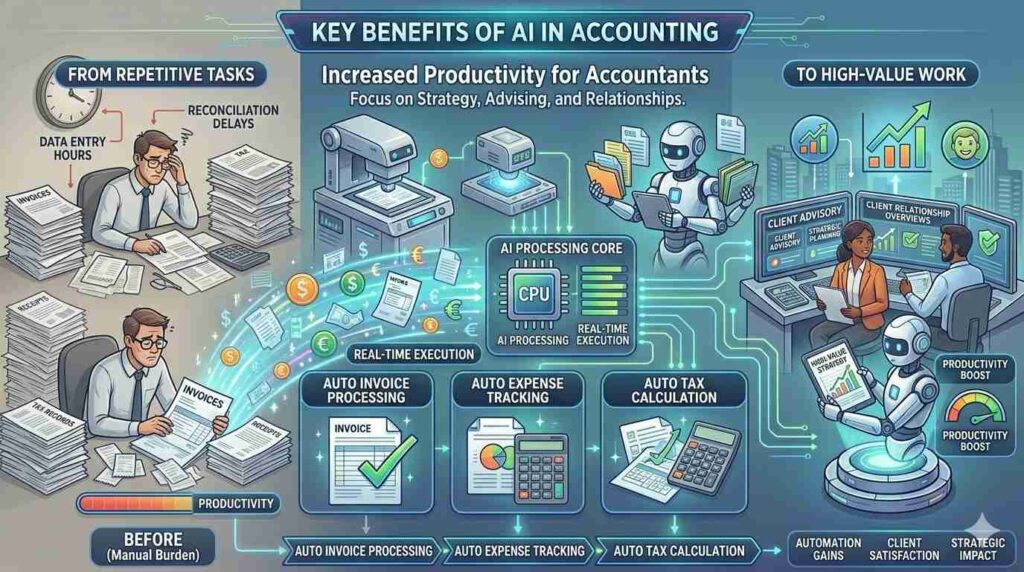
Many accountants spend a large part of their day on repetitive administrative tasks. These tasks are important, but they often limit time available for high-value work.
AI automates routine jobs such as invoice processing, expense tracking, reconciliation, and tax calculations. As a result, accountants can focus on advisory services, client relationships, and strategic planning.
Instead of replacing accountants, AI in Accounting supports them by increasing productivity and making their roles more valuable.
8. Easier Tax Compliance
Tax regulations can be complex and constantly changing. Missing deadlines or filing incorrect information can lead to penalties.
AI tools can help businesses stay compliant by organizing tax data, calculating liabilities, tracking deadlines, and generating reports. Some systems also update automatically when tax rules change.
Using AI in Accounting reduces stress during tax season and improves compliance accuracy throughout the year.
9. Better Customer and Client Service
Accounting firms that serve clients need to provide fast, accurate, and professional service. AI makes this easier by reducing delays and improving communication.
For example, AI chat tools can answer common client questions, while automated systems can prepare reports faster. This allows firms to deliver a better client experience.
When clients receive faster responses and accurate information, trust and satisfaction increase.
10. Scalability for Growing Businesses
As businesses grow, their accounting needs become more complex. More transactions, more employees, and more reporting requirements can overwhelm manual systems.
AI in Accounting makes scaling easier by handling increased workloads without a major rise in staffing costs. AI systems can process larger volumes of data while maintaining speed and accuracy.
This flexibility helps businesses grow without losing control of their finances.
Challenges to Consider
Although the benefits are impressive, businesses should also consider challenges such as implementation costs, staff training, and data privacy concerns. Choosing the right software and integrating it with current systems is important.
However, for most businesses, the long-term advantages of AI in Accounting outweigh the initial challenges.
The Future of AI in Accounting

The future of accounting is becoming more intelligent and automated. AI technology will continue to improve reporting, compliance, forecasting, and decision-making.
Accountants who learn to work with AI tools will have a strong advantage in the marketplace. Businesses that adopt AI early can also gain better efficiency and stronger financial control.
Conclusion
There is no doubt that AI in Accounting is transforming the financial industry. It improves accuracy, saves time, reduces costs, detects fraud, and delivers real-time insights. It also helps accountants become more productive and strategic.
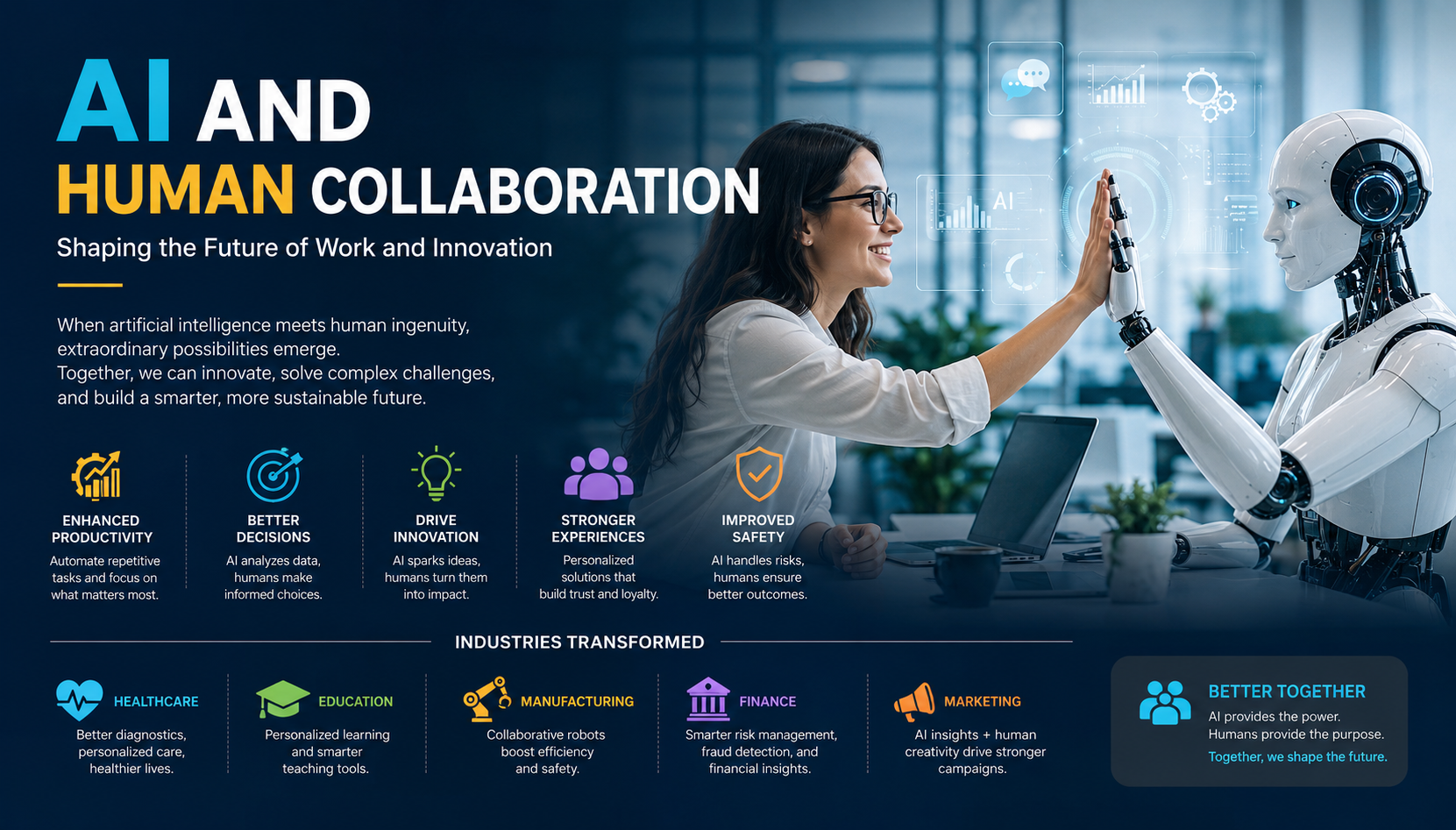
Rather than replacing human expertise, AI enhances it. Companies that embrace AI in Accounting today are preparing for a smarter and more efficient future.

Leave a Reply