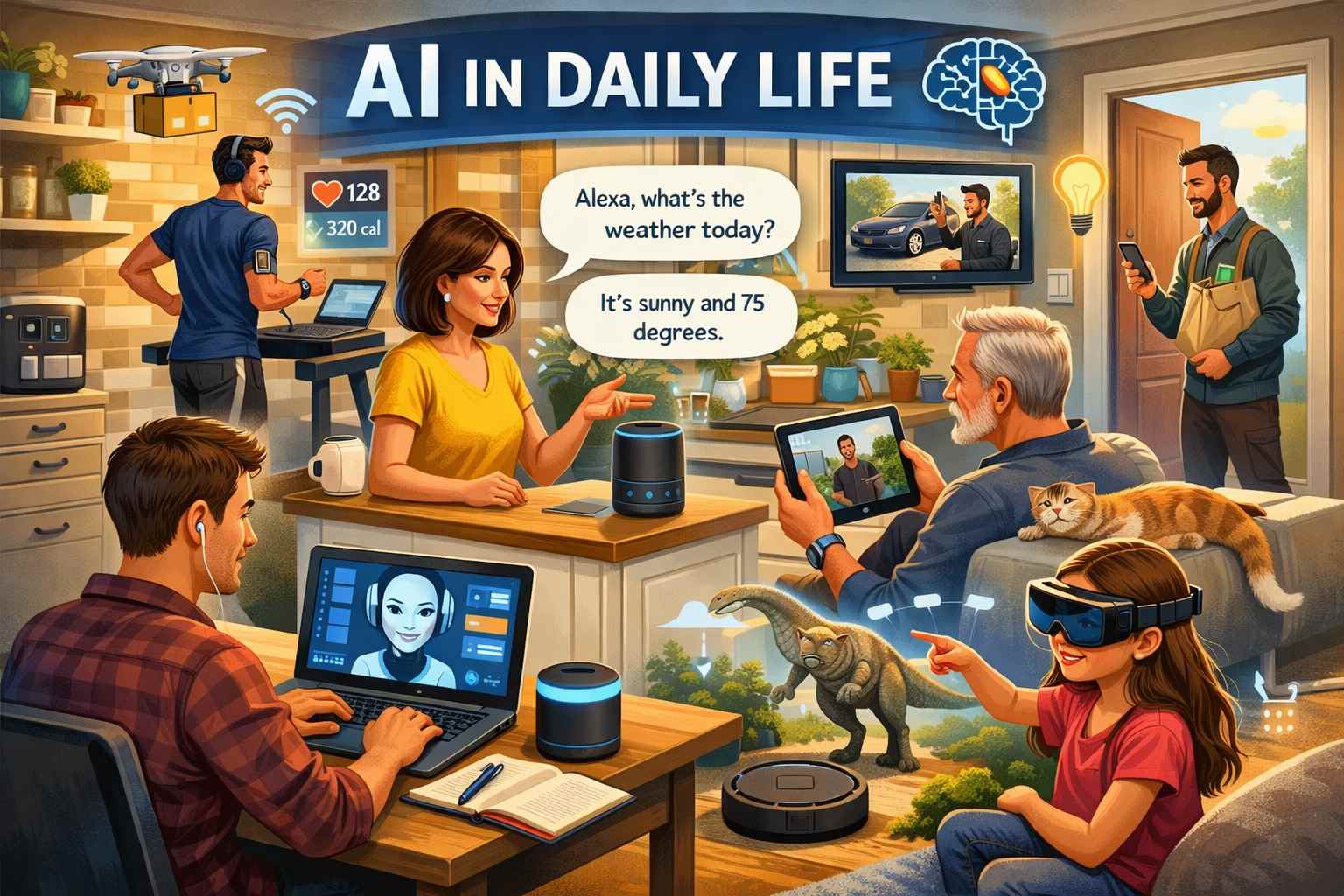
AI in Daily Life Artificial Intelligence (AI) is no longer a futuristic concept—it has become an essential part of our daily lives. From the moment we wake up to the time we go to sleep, AI quietly works behind the scenes to make our lives easier, faster, and more efficient. Whether it’s through smartphones, smart homes, or online services, AI is shaping the way we live, work, and interact.
What is AI in Daily Life?
AI in daily life refers to the use of intelligent systems and algorithms that can perform tasks that usually require human intelligence. These tasks include learning, problem-solving, decision-making, and understanding language. Today, AI is embedded in many tools and technologies we use every day—often without us even realizing it.
Examples of AI in Everyday Life
1. Smartphones and Virtual Assistants
Smartphones are one of the most common examples of how Artificial Intelligence (AI) is used in daily life. Modern smartphones are equipped with powerful AI systems that help users perform tasks quickly and efficiently. One of the most noticeable features is the presence of virtual assistants like Siri (Apple), Google Assistant, and Alexa.
Virtual assistants use AI technologies such as natural language processing (NLP) and machine learning to understand and respond to human voice commands. Users can simply speak to their phone to send messages, make calls, set alarms, check the weather, search the internet, or even control smart home devices.
AI in smartphones also works behind the scenes. It improves camera quality by automatically adjusting lighting and focus, enables face recognition for security, and provides predictive text while typing. These smart features learn from user behavior over time, making the experience more personalized and convenient.
In short, smartphones and virtual assistants make everyday tasks easier, faster, and more interactive, turning our devices into intelligent personal helpers.
2. Social Media Platforms
Social media platforms are one of the most powerful examples of Artificial Intelligence (AI) in daily life. Platforms like Facebook, Instagram, TikTok, and Twitter (X) use AI to create a personalized experience for each user.
AI algorithms analyze user behavior—such as likes, shares, comments, watch time, and search history—to understand individual interests. Based on this data, AI curates a customized feed, showing content that users are most likely to engage with. This is why no two users see the exact same posts or videos on their timelines.
AI also plays a key role in content recommendations. For example, TikTok’s “For You” page and Instagram’s “Explore” section are powered by advanced AI systems that suggest videos, reels, and posts tailored to user preferences.
Another important use ofAI in Daily Life is in targeted advertising. Businesses use AI to show ads to specific audiences based on their interests, demographics, and online behavior, making marketing more effective.
Additionally, AI helps in content moderation by detecting and removing harmful or inappropriate content, such as spam, hate speech, or fake accounts. It also enhances features like face recognition, filters, and image tagging, making social media more interactive and engaging.
In short, AI transforms social media platforms into intelligent systems that deliver personalized content, improve user experience, and connect people more effectively.
3. Online Shopping and Recommendations
Online shopping platforms are a perfect example of how Artificial Intelligence (AI) improves our daily lives. Websites and apps like Amazon, eBay, and Daraz use AI to make shopping faster, easier, and more personalized.
AI in Daily Life systems analyze user behavior, such as browsing history, search queries, and previous purchases. Based on this data, they recommend products that match the user’s interests and needs. For example, when you search for a product, you’ll often see suggestions like “Recommended for you” or “Customers also bought”—these are powered by AI algorithms.
AI also enhances the shopping experience through personalized ads and offers. It shows discounts and promotions based on what users are most likely to buy. This helps both customers (by saving time) and businesses (by increasing sales).
Another important role of AI is in chatbots and customer support. Many online stores use AI-powered chatbots to answer questions, track orders, and assist customers 24/7 without human intervention.
Additionally, AI in Daily Life helps in inventory management and demand prediction, ensuring that popular products stay in stock and deliveries are faster and more efficient.
In short, AI transforms online shopping into a smart, personalized experience, helping users find the right products quickly while improving overall convenience and satisfaction.
4. Navigation and Maps
Navigation and map applications are one of the most useful examples of Artificial Intelligence (AI) in everyday life. Apps like Google Maps, Waze, and Apple Maps use AI to help users find the best routes, avoid traffic, and reach their destinations quickly and safely.
AI systems collect and analyze real-time data from millions of users, including location, speed, and traffic conditions. Based on this information, they can suggest the fastest routes, estimate travel time, and even alert users about roadblocks, accidents, or heavy traffic ahead.
One of the key features powered by AI is real-time traffic prediction. These apps can predict congestion and automatically reroute users to save time. They also provide turn-by-turn voice navigation, making it easier for drivers to follow directions without distractions.
AI in navigation apps also improves location accuracy and helps users discover nearby places such as restaurants, petrol stations, hospitals, and hotels. Some apps even suggest the best time to leave for a trip based on traffic patterns.
In addition, AI supports features like ride-sharing services (e.g., Uber, Careem), where it matches drivers with passengers and calculates fares efficiently.
In short, AI-powered navigation and maps make travel smarter, faster, and more convenient, helping people save time and avoid unnecessary stress on the road.
5. Smart Home Devices
Smart home devices are a growing example of how Artificial Intelligence (AI) is transforming our daily lives. These devices use AI to automate household tasks, improve comfort, and enhance home security.
Common smart home devices include smart speakers (like Amazon Alexa and Google Nest), smart lights, thermostats, security cameras, and smart locks. These devices can be controlled remotely using smartphones or voice commands through virtual assistants.
AI allows these devices to learn user habits and preferences over time. For example, a smart thermostat can automatically adjust the temperature based on your daily routine, while smart lighting systems can turn lights on or off depending on your presence in a room.
Another important feature is home automation. Users can set schedules or create routines—such as turning off all lights and locking doors at night with a single command. This not only saves time but also improves energy efficiency.
AI-powered security systems add an extra layer of protection by detecting unusual activity, sending alerts, and even recognizing familiar faces.
In short, smart home devices make homes more intelligent, secure, and energy-efficient, offering greater convenience and control to users.
6. Healthcare Applications
Artificial Intelligence (AI) is playing a transformative role in the healthcare industry, improving the quality of care and making medical services more efficient and accessible. From diagnosis to treatment, AI is helping doctors and patients in many important ways.
One of the key uses of AI in healthcare is disease diagnosis. AI systems can analyze medical data such as X-rays, MRIs, and lab reports to detect diseases like cancer, heart conditions, and infections at an early stage. This helps doctors make faster and more accurate decisions.
AI in Daily Life is also used in treatment planning and personalized medicine. By analyzing a patient’s medical history, genetics, and lifestyle, AI can suggest customized treatment plans that are more effective for individual patients.
Another important application is virtual health assistants and chatbots. These AI-powered tools can provide basic medical advice, remind patients to take medication, and answer health-related questions, making healthcare more accessible—especially for people in remote areas.
AI also plays a role in drug discovery and research, helping scientists develop new medicines faster by analyzing large amounts of data in a short time.
In addition, wearable devices and fitness apps use AI to monitor health in real time, tracking heart rate, sleep patterns, and physical activity. These tools encourage healthier lifestyles and help detect potential health issues early.
In short, AI in healthcare is saving lives, reducing costs, and improving patient care by making medical systems smarter and more efficient.
7. Banking and Fraud Detection
Artificial Intelligence (AI) has become an essential part of modern banking systems, helping financial institutions provide faster services, improve security, and enhance customer experience. One of the most important applications of AI in banking is fraud detection.
AI systems can analyze thousands of transactions in real time to identify unusual or suspicious activity. For example, if a transaction is made from a different location or involves an unusual amount, AI can quickly flag it and alert the bank or customer. This helps prevent fraud such as unauthorized payments, identity theft, and credit card misuse.
AI in Daily Life is also used in customer service through chatbots and virtual assistants. These tools can handle common queries like checking account balances, transaction history, or guiding users through banking services—available 24/7 without waiting.
Another key use of AI in banking is credit scoring and risk assessment. AI analyzes customer data, including spending habits and financial history, to determine creditworthiness. This helps banks make better decisions when approving loans or credit cards.
Additionally, AI improves personalized banking services by offering tailored financial advice, budgeting tips, and investment suggestions based on user behavior.
In short, AI in Daily Life makes banking more secure, efficient, and customer-friendly by detecting fraud quickly and providing smarter financial services.
Benefits of AI in Daily Life
- Convenience: Automates routine tasks and saves time
- Personalization: Offers tailored recommendations and experiences
- Efficiency: Improves productivity in both personal and professional tasks
- Better Decision-Making: Provides insights based on data analysis
Challenges of AI in Daily Life
While AI brings many advantages, it also comes with challenges:
- Privacy Concerns: Collection of personal data can be risky
- Job Displacement: Automation may replace certain jobs
- Dependence on Technology: Over-reliance on AI can reduce human skills
- Bias in Algorithms: AI systems can sometimes make unfair decisions
The Future of AI in Daily Life
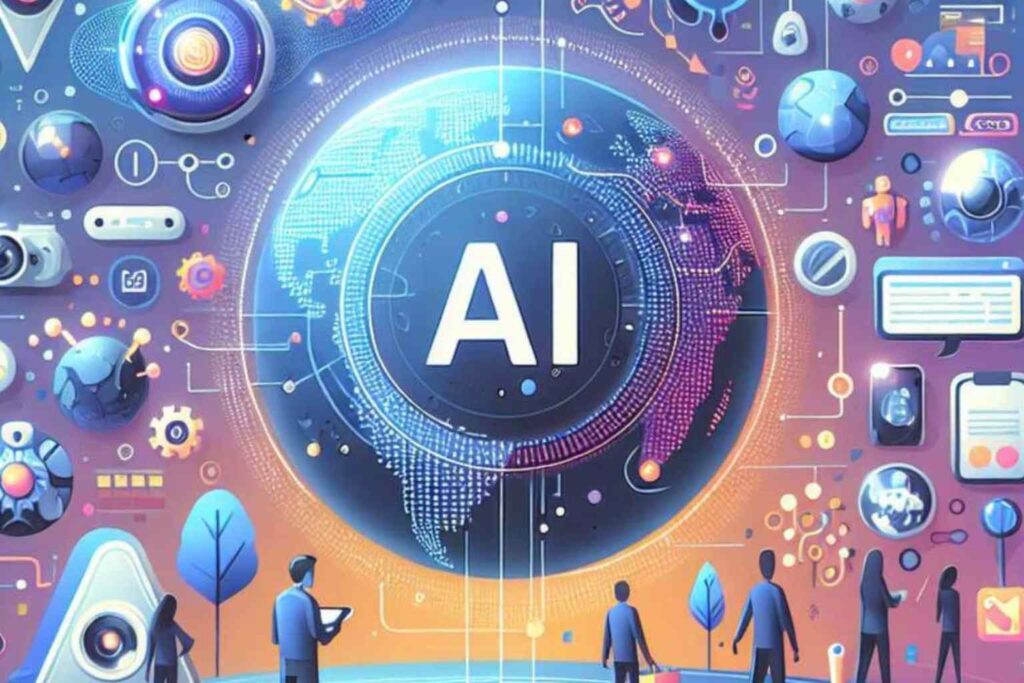
The role of AI will continue to grow in the future. We can expect smarter cities, more advanced healthcare systems, and highly personalized digital experiences. AI will likely become even more integrated into our routines, making life more connected and intelligent.
Conclusion
AI in daily life is transforming how we interact with technology and the world around us. While it offers incredible benefits like convenience and efficiency, it is important to use it responsibly and address its challenges. As AI continues to evolve, it will play an even bigger role in shaping our future.
Blog
This section provides an overview of the blog, showcasing a variety of articles, insights, and resources to inform and inspire readers.
-
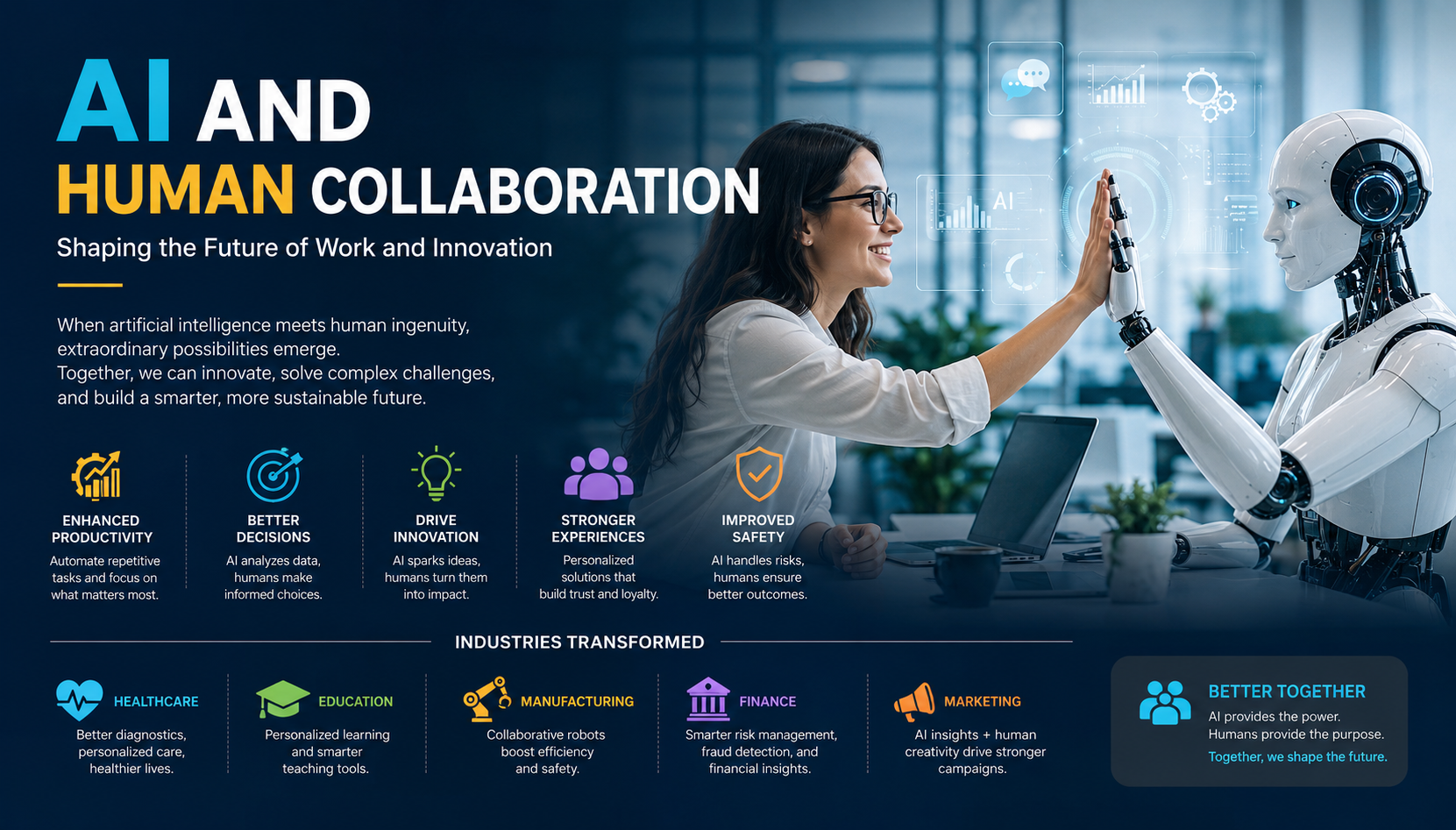
AI and Human Collaboration: Shaping the Future of Work and Innovation
AI and Human Collaboration: Artificial Intelligence (AI) is no longer a futuristic concept limited to…
-
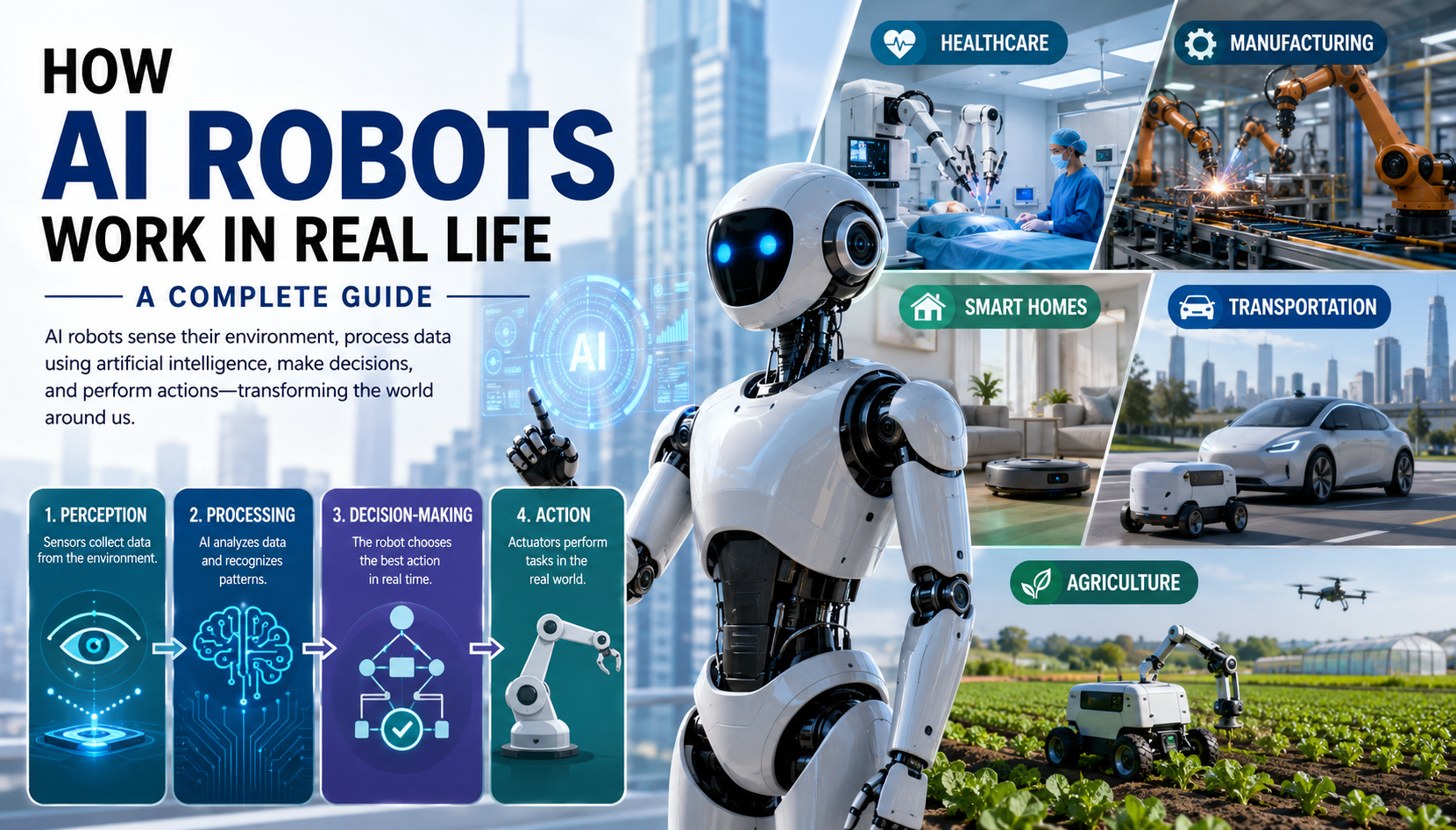
How AI Robots Work in Real Life: A Complete Guide
The idea of robots powered by artificial intelligence once belonged only to science fiction. Today,…
-

The Power of AI in Cybersecurity: Smarter Defense, Key Benefits & What’s Next
AI in Cybersecurity has become one of the most critical concerns for organizations in the…

Leave a Reply